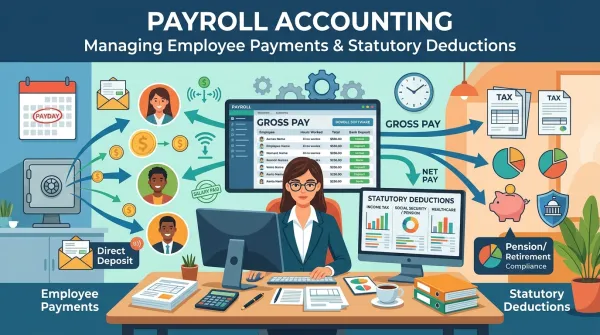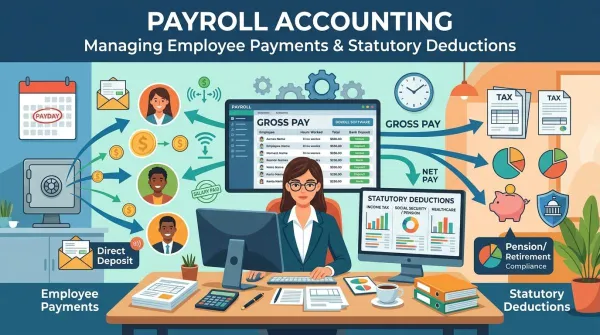
Payroll Accounting: Managing Employee Payments and Statutory Deductions
Employees are an important part of every organisation, and ensuring that they receive accurate and timely compensation is a fundamental responsibility of business management.
However, payroll administration involves more than calculating monthly salaries. It requires proper record-keeping, accurate deductions, appropriate approvals and compliance with applicable employment and tax requirements.
This is where payroll accounting becomes essential.
What Is Payroll Accounting?
Payroll accounting is the process of calculating, recording and reporting employee compensation and related deductions.
It includes basic salaries, allowances, bonuses, overtime, employee deductions and employer contributions where applicable.
Proper payroll accounting ensures that employee compensation is accurately reflected in the organisation's financial records.
Key Components of Payroll Accounting
1. Gross Salary
This is the total employee compensation before applicable deductions.
2. Allowances and Benefits
These may include housing, transportation, bonuses and other employment-related benefits, depending on the employee's terms of employment.
3. Statutory Deductions
These are deductions required under applicable laws and regulations. Depending on the circumstances, they may include Pay-As-You-Earn (PAYE) tax, pension contributions and other statutory obligations.
4. Net Salary
This is the amount payable to an employee after applicable deductions.
5. Employer Contributions
Certain employment-related obligations may require additional contributions from the employer.
Why Is Payroll Accounting Important?
Accurate Salary Payments: It helps ensure employees receive the correct compensation.
Regulatory Compliance: It supports compliance with applicable tax, pension and employment requirements.
Financial Reporting: Payroll expenses and related liabilities are properly reflected in accounting records.
Employee Confidence: Reliable payroll administration supports trust between employees and management.
Cost Management: It helps management monitor salary expenses and plan workforce budgets.
How Can Businesses Improve Payroll Management?
- Maintain updated employee records.
- Establish an approved salary structure.
- Verify attendance, overtime and applicable allowances.
- Calculate deductions accurately.
- Review payroll before payment.
- Restrict access to confidential payroll information.
- Reconcile payroll records with bank payments.
- Maintain supporting documents for payroll transactions.
- Remit applicable statutory deductions within required timelines.
Common Payroll Accounting Mistakes
Errors may arise from outdated employee records, incorrect salary calculations, duplicated payments, incorrect deductions or failure to update employee changes.
Businesses should introduce review procedures and ensure that payroll calculations are independently checked before payments are processed.
Conclusion
Payroll accounting is a critical part of financial management because it connects employee compensation, business expenses and statutory compliance.
A well-organised payroll system helps businesses maintain accurate records, meet applicable obligations and manage employee payments responsibly.
US & CO. Chartered Accountant
Educational insights into accounting, taxation and financial management.