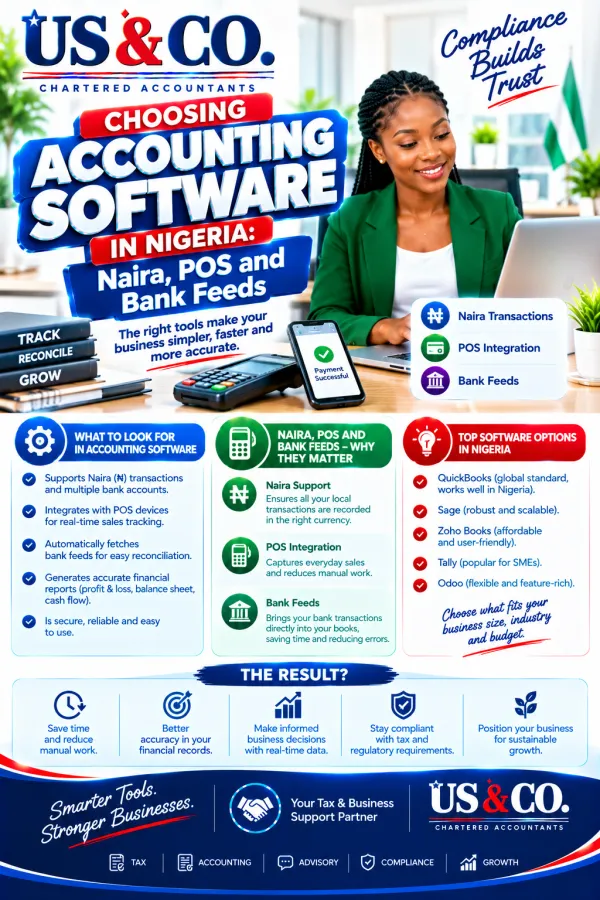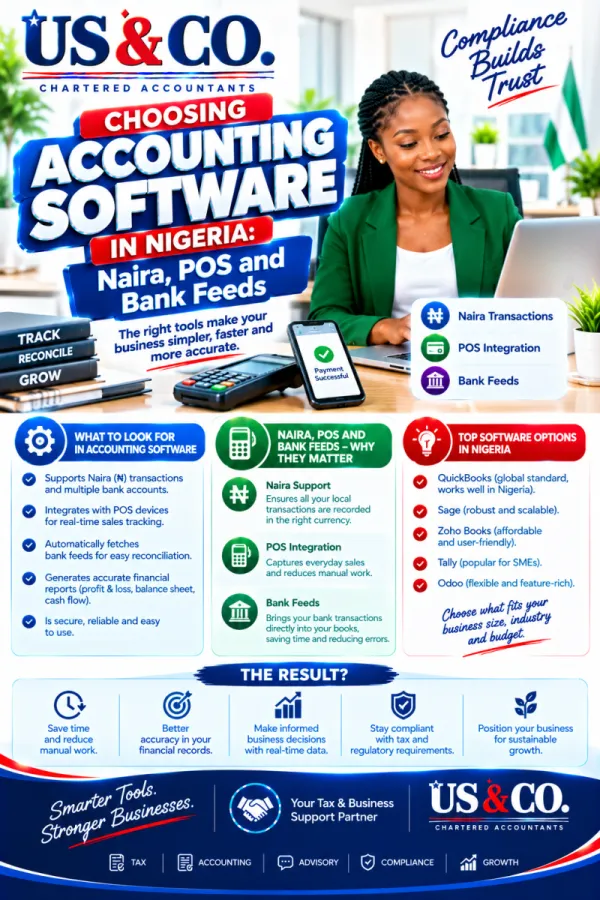
As Nigerian businesses grow beyond manual spreadsheets and paper ledgers, accounting software becomes a practical necessity rather than a luxury. The right platform reduces errors, speeds up reconciliation, and makes tax filing considerably less stressful. This article does not endorse any specific product; instead, it sets out the features Nigerian businesses should look for when evaluating their options, consistent with giving readers the information to make their own informed decision.
How it works
Accounting software automates much of the recording, categorization and reconciliation work that would otherwise be done manually. At a basic level, it tracks income and expenses; at a more advanced level, it can integrate directly with bank accounts and payment platforms, generate VAT and payroll computations, and produce financial statements.
Features particularly relevant to Nigerian businesses
- Naira-denominated reporting as standard, with clear support for multi-currency transactions where a business deals in foreign currency as well.
- POS and mobile money integration, given how widely point-of-sale terminals and transfer-based payments are used in Nigerian retail and services.
- Bank feed support, allowing transactions from Nigerian bank accounts to flow into the software automatically rather than requiring manual entry.
- VAT tracking aligned with current Nigerian VAT rules, including the distinction between standard-rated, zero-rated and exempt supplies.
- Payroll functionality that can apply current PAYE bands, pension contribution rates and other statutory deductions correctly.
- Invoicing features that support the kind of documentation needed for input VAT recovery and expense substantiation.
- Data security and backup, particularly important given the retention periods expected for tax records.
Why this matters to taxpayers
The quality of a business's accounting records directly affects the accuracy and defensibility of its tax filings. Software that is poorly suited to the Nigerian context, for example lacking proper Naira reporting or VAT classification support, can create more work rectifying errors than it saves in day-to-day use.
Tax implications
- Software that does not correctly track input and output VAT separately can lead to filing errors.
- Inconsistent or incomplete bank reconciliation, where feeds are not properly matched, can leave gaps that are difficult to explain if a return is queried.
- Payroll modules using outdated tax bands or contribution rates can result in PAYE and pension under or over-deduction.
- Poor data backup practices can jeopardize a business's ability to meet its record retention obligations if data is lost.
Step by step: choosing the right platform for your business
- Assess your business size and complexity, since a sole proprietor's needs differ significantly from a growing company with multiple staff and VAT obligations.
- List the specific features you need, prioritizing Naira reporting, POS or bank feed integration, and VAT tracking, based on your transaction types.
- Check whether the platform supports current Nigerian payroll requirements, if you have employees.
- Consider ease of use for whoever will operate the system day to day, since a powerful tool that is too complex to use consistently defeats its purpose.
- Review data security, backup and export capabilities, to ensure your records remain accessible and protected.
- Trial the software with real transactions for a period before fully committing, to confirm it fits your actual workflow.
- Plan for a clean migration if you are moving from manual records or another system, rather than starting with incomplete historical data.
Why engage a professional consulting firm
- Independent assessment of which features actually matter for your specific business, rather than being guided by marketing claims.
- Support setting up the software correctly from the start, including chart of accounts, tax codes and payroll settings.
- Ongoing review to confirm the software's output remains accurate and aligned with current tax rules as they change.
- Training for staff who will use the system, to ensure consistent and correct day-to-day use.
Why every business should comply
Whatever system a business uses, manual or software-based, the underlying obligation is the same: accurate, complete and retrievable records that support every tax filing made. Good software is a tool toward that obligation, not a substitute for understanding what needs to be recorded and why.
Tips and points to watch
- Do not assume a platform is correctly configured for Nigerian tax rules simply because it is in use; verify VAT and payroll settings directly.
- Review your software's output periodically against your actual bank statements and filed returns, rather than trusting automation blindly.
- Keep an exported backup of your records outside the software itself, in case of access issues.
- Revisit your software choice as your business grows, since a tool suited to a very small business may not scale well.
Relevant law
- Nigeria Tax Administration Act, 2025 (record-keeping and filing requirements that any accounting system should support)
- Nigeria Tax Act, 2025 (VAT, PAYE and other computations the software should reflect accurately)
Frequently asked questions
Do I need accounting software if my business is very small?
Not necessarily. A well-maintained spreadsheet can suffice at a small scale, but software becomes increasingly valuable as transaction volume and complexity grow.
Does accounting software file my taxes for me?
Generally not automatically. It supports accurate record-keeping and computation, but filing typically still requires a deliberate step, often with professional review.
How do I know if software correctly applies current Nigerian tax rules?
Verify its VAT and payroll settings directly against current rates and bands, since software is only as accurate as its configuration and updates.
Should I choose software based on price alone?
Price is one factor, but features relevant to your specific business, such as POS integration or payroll support, matter more for long-term usefulness and compliance.
Where you need further assistance: You may contact US & CO. (Chartered Accountant), a professional tax consulting firm in Lagos, Nigeria.
📞 WhatsApp: 08056219998
📧 Email: info@usc.com.ng
🌐 Website: https://www.usc.com.ng
Footnote: This article is for general information only. It is not complete investment, tax or legal advice. Readers should consult a qualified professional and confirm current requirements with the relevant tax authority before making any investment or tax decision.