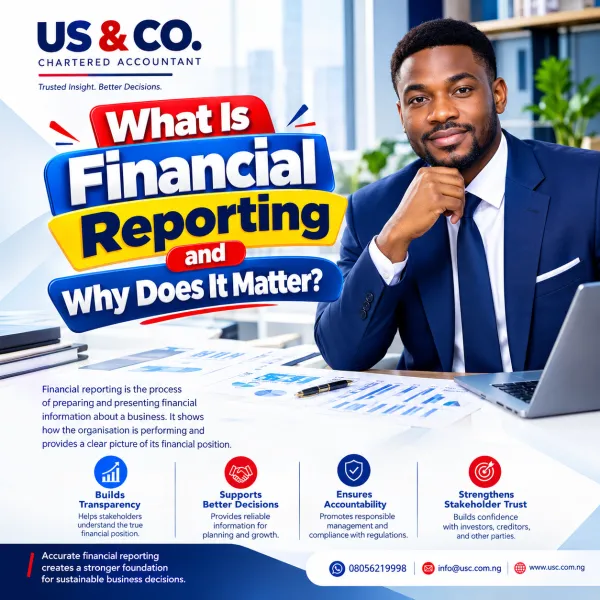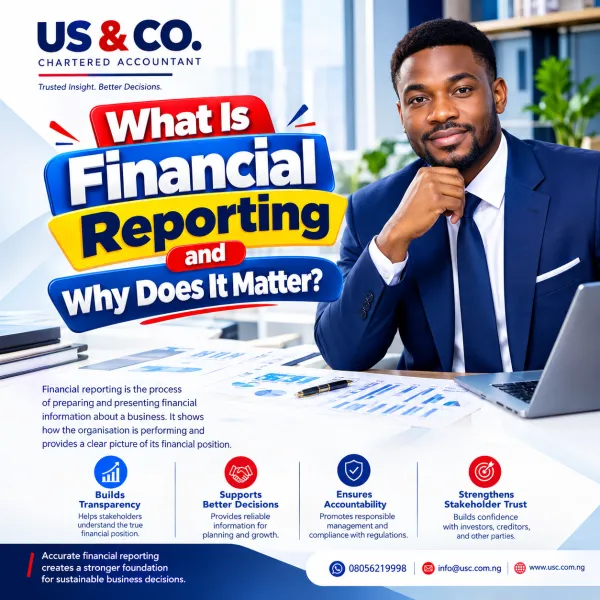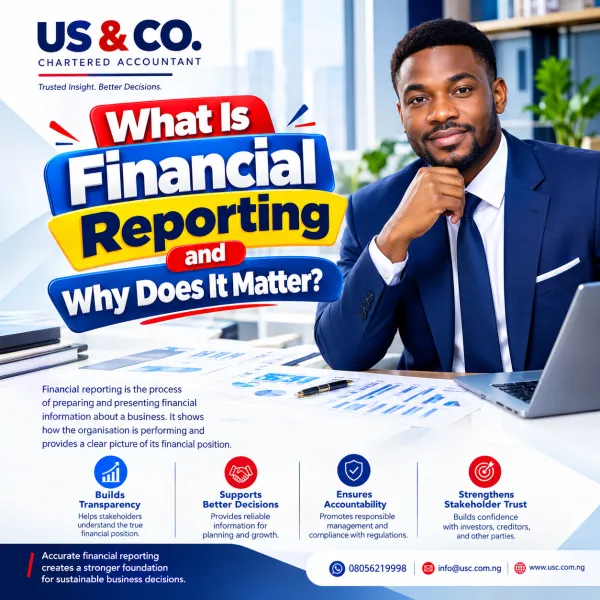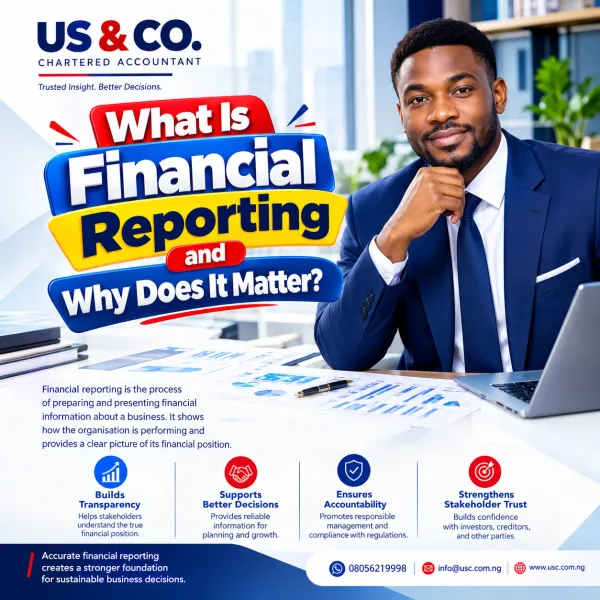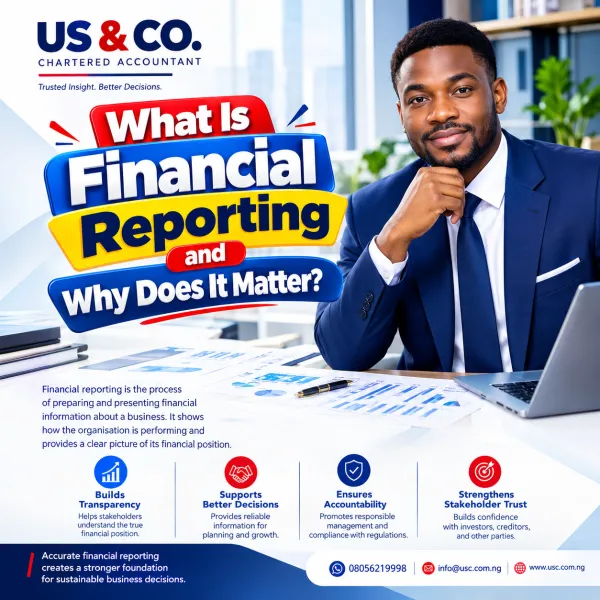
What Is Financial Reporting and Why Does It Matter?
Financial reporting is the structured preparation of financial information by a business, using an agreed framework (commonly IFRS as applicable in Nigeria) and then presenting it in statements such as the statement of financial position, profit or loss, cash flows, and notes. In practice, it turns day-to-day records into information management can use, and tax authorities can rely on. For tax governance, financial reporting supports consistent computation of taxable income and proper reconciliation of deductions and liabilities.
**How financial reporting works (overview)**
1) Collect source records (invoices, bank statements, payroll, expense vouchers).
2) Record transactions in the accounting system.
3) Adjust for accruals, prepayments, depreciation, and provisions.
4) Compile draft financial statements and disclosures.
5) Review, approve, and retain working papers.
**Step-by-step: how to invest in financial reporting**
1) Set reporting timelines and responsibilities.
2) Adopt an accounting policy aligned with your reporting and tax obligations.
3) Implement controls for sales, purchases, payroll, and bank reconciliations.
4) Train staff on documentation requirements.
5) Perform periodic management accounts and year-end closing checks.
6) Engage a chartered accountant for review and assurance over key figures.
**Why it matters to taxpayers in Nigeria**
Taxpayers need financial reporting to support accurate tax returns, respond to audits, and reduce avoidable errors in VAT, income tax, and withholding tax computations. Where disclosures or classifications are incorrect, tax positions may be adjusted, leading to interest and penalties.
**Tax implications (relevant areas of law)**
- **CITA (Companies Income Tax Act):** taxable profit is derived from accounting profit with permitted tax adjustments.
- **CGA/CAMA obligations (company reporting):** financial statements must be prepared and kept for compliance.
- **VAT Act & WHT rules:** proper invoicing, records, and reconciliation affect input VAT and withholding outcomes.
- **Penalties and assessments:** incorrect or late filings can trigger additional charges after assessment.
**Reference from Nigeria Revenue Service (NRS)**
In NRS tax administration guidance, the recurring expectation is that tax returns should be supported by records and reflect accurate information. Accurate financial reporting is the practical basis for meeting that expectation.
**Professional consulting reasons/advantages to avoid error**
A professional consulting firm (such as **US & CO. (Chartered Accountant)**) helps ensure correct classification of expenses and income, consistent application of accounting policies, reliable reconciliation of tax computations, complete documentation for audit trails, and compliance with statutory deadlines.
**Tips to sustain compliant reporting**
- Maintain clean documentation from the start (invoice trails, payroll sheets, bank proof).
- Reconcile monthly (especially receivables, payables, and bank).
- Separate capital items from revenue expenses.
- Review liabilities (accruals) before final returns.
- Keep evidence of adjustments used to arrive at taxable profit.
**Why every business should comply with tax regulation**
Compliance supports predictable tax treatment, reduces disputes, strengthens governance, and improves the reliability of decisions based on financial information.
Where you need further assistant: Contact Professional Tax Consulting Firm in Lagos, Nigeria on:
📞 WhatsApp: 08056219998
📧 Email: info@usc.com.ng
🌐 Website: https://www.usc.com.ng