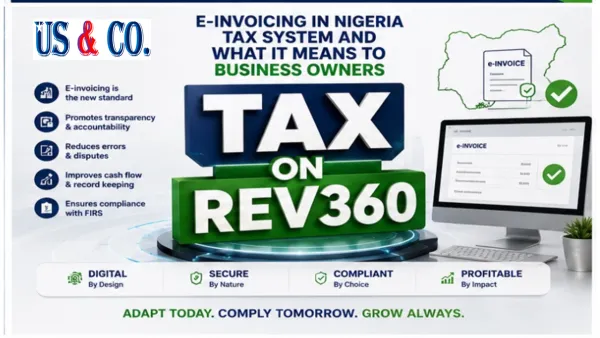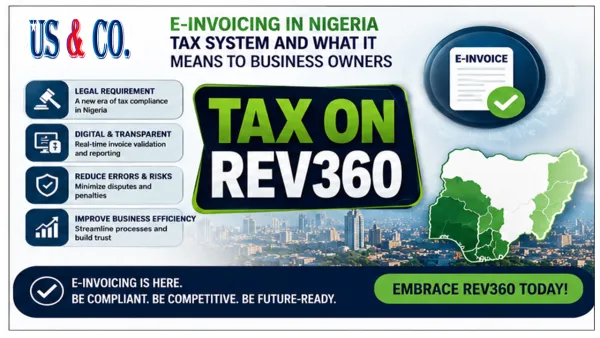
E-INVOICING IN NIGERIA TAX SYSTEM AND WHAT IT MEANS TO BUSINESS OWNERS
Understanding Electronic Invoicing, Digital Tax Compliance, and Business Record Management in Nigeria
Nigeria’s tax and financial reporting environment is evolving rapidly with increased emphasis on digital compliance systems, electronic record management, and transparent transaction reporting. One of the major developments attracting attention among businesses, accountants, and tax authorities is electronic invoicing, commonly referred to as E-Invoicing.
For many business owners, invoicing has traditionally been viewed as a routine administrative process. However, under the current regulatory and digital compliance environment, invoicing is increasingly becoming part of broader tax administration, financial reporting, and transaction verification systems.
Understanding E-Invoicing and its implications is important for businesses seeking to maintain proper records, support tax compliance, and improve operational efficiency within Nigeria’s changing regulatory framework.
What is E-Invoicing?
E-Invoicing refers to the electronic generation, transmission, storage, and management of invoices through digital systems instead of traditional manual or paper-based invoicing methods.
An electronic invoice typically contains:
- Seller information
- Buyer information
- Description of goods or services
- Invoice number
- Transaction date
- Applicable taxes such as VAT
- Payment details
- Digital transaction records
E-Invoicing systems are designed to improve transaction documentation, enhance transparency, and support efficient tax administration.
Why E-Invoicing is Becoming Important in Nigeria
The Nigerian tax environment is gradually moving toward digital monitoring and electronic compliance systems. E-Invoicing forms part of this transition.
The increasing relevance of E-Invoicing is connected to:
- Digital tax administration initiatives
- Improved VAT monitoring
- Better transaction traceability
- Reduction in manual documentation errors
- Improved audit trails
- Enhanced record retention systems
Businesses that maintain organized electronic transaction records may be better positioned to support regulatory reviews and compliance obligations.
How E-Invoicing Works
E-Invoicing systems generally operate through digital accounting or invoicing platforms that electronically generate and store transaction records.
The process typically involves:
- Creation of an electronic invoice through accounting software or invoicing platforms
- Automatic computation of applicable taxes such as VAT
- Digital transmission of invoices to customers
- Electronic storage of transaction records
- Retrieval of invoices for accounting, tax filing, or audit purposes
In some tax administration systems, electronic invoice records may also integrate with tax reporting and compliance monitoring processes.
What E-Invoicing Means for Business Owners
For business owners in Nigeria, E-Invoicing is more than a technology upgrade. It represents a shift toward structured financial reporting and more transparent transaction management.
Businesses may increasingly be expected to maintain:
- Proper transaction records
- Accurate VAT documentation
- Traceable sales records
- Organized accounting systems
- Reliable audit trails
Poor invoicing practices can create challenges during:
- Tax filing
- VAT reconciliation
- Tax audits
- Financial reporting
- Regulatory reviews
Businesses that adopt organized invoicing systems early may experience fewer compliance difficulties over time.
The Relationship Between E-Invoicing and Tax Compliance
E-Invoicing is closely connected to tax administration because invoices form part of the foundation for:
- Revenue reporting
- VAT computation
- Withholding tax documentation
- Tax assessments
- Audit verification
- Financial statement preparation
Incomplete or inaccurate invoicing may affect the accuracy of tax filings and financial records.
This is why accountants and tax professionals often encourage businesses to maintain structured invoicing systems and proper supporting documentation.
Step-by-Step Guide to Filing Accounts on REV360
As Nigeria continues moving toward digital compliance systems, accountants and business owners should also understand platforms such as REV360, which support electronic tax administration and filing processes.
Although filing procedures may vary depending on the applicable tax authority, the following general process is common.
Step 1: Access the REV360 Portal
Visit the official REV360 portal provided by the relevant tax authority.
Ensure that the following are available:
- Internet connection
- Taxpayer login credentials
- Tax Identification Number (TIN)
- Financial records and schedules
Step 2: Log Into the Taxpayer Account
Input the required login details including:
- Username or TIN
- Password
- Authentication credentials where required
Step 3: Verify Business Information
Confirm the accuracy of:
- Registered business name
- RC number
- TIN
- Business address
- Contact details
- Nature of business activities
Incorrect information may create filing discrepancies.
Step 4: Prepare Financial Statements and Supporting Schedules
Businesses should ensure proper reconciliation of:
- Financial statements
- VAT schedules
- Sales records
- E-Invoice records
- Payroll schedules
- Tax computation schedules
- Withholding tax records
Proper record preparation improves filing accuracy.
Step 5: Select the Appropriate Tax Filing Category
Choose the applicable filing category such as:
- Companies Income Tax
- VAT returns
- PAYE obligations
- Withholding Tax filings
Step 6: Upload Supporting Documents
Upload relevant supporting documents, which may include:
- Audited financial statements
- Tax computation schedules
- Evidence of tax payments
- VAT schedules
- Supporting annexures
Step 7: Review Tax Computations Carefully
Before submission, review:
- Revenue figures
- VAT calculations
- Deductible expenses
- Capital allowances
- Tax credits and prior payments
Errors may result in penalties or additional assessments.
Step 8: Submit the Return
Submit the tax return electronically and retain the acknowledgment generated by the platform.
Step 9: Generate Payment Reference
Where taxes are payable, generate the relevant payment reference for payment processing.
Step 10: Retain Compliance Records
Maintain copies of:
- Filed returns
- Payment receipts
- Electronic invoices
- VAT schedules
- Compliance acknowledgments
Good record management supports future audits and regulatory reviews.
Why Businesses Should Take Tax Compliance Seriously
Tax compliance is a statutory responsibility for businesses operating in Nigeria.
Businesses that maintain proper compliance may benefit from:
- Easier access to Tax Clearance Certificates
- Improved regulatory standing
- Better business credibility
- Eligibility for contracts and tenders
- Improved financial documentation
Non-compliance may expose businesses to:
- Penalties and interest charges
- Tax investigations
- Additional tax assessments
- Regulatory restrictions
Relevant Tax Laws Businesses Should Understand
Businesses should remain aware of relevant Nigerian tax laws and regulations including:
- Companies Income Tax Act (CITA)
- Value Added Tax Act (VAT Act)
- Personal Income Tax Act (PITA)
- Capital Gains Tax Act
- Stamp Duties Act
- Finance Acts issued periodically
- Relevant regulations issued by the Federal Inland Revenue Service
These laws influence how businesses prepare records, compute taxes, and maintain compliance.
Why Professional Tax Guidance Remains Important
Although digital systems simplify filing processes, tax compliance itself remains technical and regulated.
Professional assistance may help businesses in areas such as:
- VAT reconciliation
- Financial reporting
- Tax computation
- Interpretation of Finance Act provisions
- Preparation of supporting schedules
- Record management
- Audit support
Professional review may also help reduce avoidable filing errors.
Advantages of Using Professional Tax Consultants
1. Improved Filing Accuracy
Professional review may reduce computational and documentation errors.
2. Better Documentation Standards
Tax professionals help businesses maintain organized accounting and invoice records.
3. Improved VAT Compliance
Accurate invoicing and VAT reconciliation are important under digital compliance systems.
4. Assistance During Tax Audits
Well-prepared records may support businesses during tax reviews and reconciliations.
5. Identification of Legitimate Tax Reliefs
Professionals may help businesses identify applicable tax credits, deductions, and allowances permitted under Nigerian law.
Tax Credits and Opportunities Businesses Should Understand
Subject to eligibility and proper documentation, businesses may benefit from:
Capital Allowances
Qualifying capital expenditure may attract capital allowance claims.
Allowable Business Expenses
Properly documented business expenses incurred wholly, exclusively, necessarily, and reasonably may qualify as deductible expenses.
Tax Loss Relief
Businesses may carry forward tax losses in line with applicable tax laws.
Pioneer Status Incentives
Eligible industries may qualify for approved tax relief incentives.
Export Incentives
Certain export-oriented businesses may qualify for government-approved incentives.
Practical Compliance Tips for Business Owners
- Maintain organized accounting records
- Adopt proper invoicing systems
- Keep VAT records updated
- Reconcile financial records regularly
- File tax returns before deadlines
- Retain electronic invoices and supporting schedules
- Monitor updates to Finance Acts and tax regulations
- Seek professional guidance where necessary
The Human Side of E-Invoicing and Compliance
Behind every invoice is a real business transaction, a customer relationship, and an operational decision. Many Nigerian businesses are already balancing rising operational costs, market uncertainty, staffing pressures, and customer expectations.
Structured invoicing and organized tax records may not remove every business challenge, but they can reduce avoidable compliance problems and support more informed financial management.
As regulatory systems become increasingly digital, businesses that maintain discipline in their record management processes are often better prepared for audits, regulatory reviews, and long-term operational sustainability.
Professional Support
Businesses requiring guidance on accounting systems, E-Invoicing documentation, tax compliance, financial reporting, and regulatory obligations may consult qualified professionals for assistance.
US & CO. (Chartered Accountant)
📞 WhatsApp: +2348056219998
📧 Email: info@usc.com.ng
Frequently Asked Questions (FAQ)
1. What is E-Invoicing?
E-Invoicing refers to the electronic generation, transmission, and storage of invoices through digital systems.
2. Why is E-Invoicing important in Nigeria?
E-Invoicing supports proper record management, VAT documentation, transaction traceability, and digital tax compliance.
3. Does E-Invoicing replace accounting records?
No. E-Invoicing supports accounting processes but businesses must still maintain complete accounting records and supporting documents.
4. Can electronic invoices support tax audits?
Yes. Properly maintained electronic invoices may support tax reviews, reconciliations, and audit processes.
5. What is the relationship between E-Invoicing and VAT?
Invoices form part of the supporting documentation used for VAT reporting and reconciliation.
6. Why should businesses maintain proper invoicing systems?
Proper invoicing improves financial reporting accuracy, reduces documentation errors, and supports compliance management.
7. Can small businesses benefit from E-Invoicing?
Yes. Organized invoicing systems may improve record keeping and simplify financial management for businesses of different sizes.
8. Why is professional tax guidance important under digital tax systems?
Digital filing platforms simplify submission processes, but professional expertise remains important for proper tax computation, reconciliation, regulatory interpretation, and compliance management.
US & CO. (Chartered Accountant)
📞 WhatsApp: +2348056219998
📧 Email: info@usc.com.ng