Step-by-Step on How to File Your Tax on REV360 in Nigeria
A professional, SEO-friendly guide for businesses, entrepreneurs, and taxpayers
Nigeria’s tax administration system is evolving rapidly with the introduction of REV360, the next-generation digital tax compliance platform introduced by the Nigeria Revenue Service (NRS). The platform is designed to improve tax filing efficiency, strengthen transparency, and support easier compliance for taxpayers across the country.
For business owners, company directors, finance managers, and individual taxpayers, understanding how to file correctly on REV360 is essential to avoid penalties, interest, and regulatory exposure.
This guide explains how REV360 works, why it matters to government and taxpayers, and why engaging a professional consulting firm can help reduce filing errors and compliance risk.
What Is REV360?
REV360 is Nigeria’s upgraded tax administration portal built to support end-to-end digital tax processes, real-time reporting, and improved taxpayer experience.
The platform represents the transition from older systems into what the NRS describes as Tax Administration 3.0, focusing on automation and embedded compliance processes.
Key Functions of REV360
REV360 is expected to support:
- Tax registration and taxpayer profile management
- Filing of company income tax returns
- VAT filing and remittance
- Withholding tax schedules
- Tax credit and offset management
- Payment confirmation and receipt generation
- Compliance tracking
- Tax history and audit trail
This digital framework helps businesses maintain proper documentation and meet statutory obligations more efficiently.
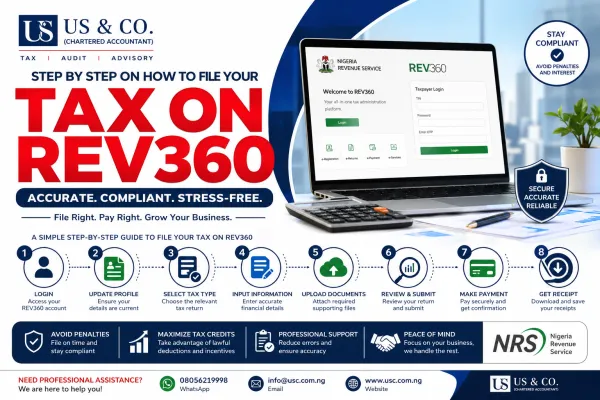
Step-by-Step: How to File Your Tax on REV360
Step 1: Access the REV360 Portal
Visit the official NRS/REV360 tax filing portal and log in with your:
- Tax Identification Number (TIN)
- Registered email address
- Password
- OTP/security verification code where required
Ensure that the business profile details are correct before proceeding.
Step 2: Update Taxpayer Profile
Before filing, verify the following:
- Registered business name
- RC number / CAC registration details
- TIN
- Registered office address
- Contact details
- Industry classification
- Tax office details
Incorrect taxpayer profile information may lead to filing mismatches and compliance notices.
Step 3: Select the Relevant Tax Type
Choose the exact tax return you intend to file, such as:
- Company Income Tax (CIT)
- Value Added Tax (VAT)
- Withholding Tax (WHT)
- Pay-As-You-Earn (PAYE) where applicable
- Education Tax / Development Levy
- Other applicable statutory filings
Selecting the wrong tax head can lead to incorrect assessments.
Step 4: Input Financial Information
Enter the required financial figures carefully.
Typical information may include:
- Turnover / gross revenue
- Cost of sales
- Operating expenses
- Profit before tax
- Capital allowances
- Tax-deductible expenses
- Previous tax credits
- Withholding tax credits
- Loss relief brought forward
This stage requires strong accounting accuracy because errors here directly affect tax liability.
Step 5: Upload Supporting Documents
Attach required schedules and statutory documents such as:
- Audited financial statements
- Tax computation
- Capital allowance schedule
- Withholding tax credit notes
- VAT schedules
- Trial balance
- Supporting invoices and schedules
For corporate taxpayers, proper documentation is critical for audit defence.
Step 6: Review Tax Computation
REV360 may auto-compute tax liability based on the submitted figures.
Review carefully for:
- arithmetical accuracy
- tax rate application
- credit utilisation
- carry-forward losses
- minimum tax considerations
- applicable exemptions and incentives
This stage is where professional review adds significant value.
Step 7: Submit Return
After reviewing, submit the return electronically.
Save and download:
- acknowledgment slip
- filing reference number
- tax assessment notice
- payment reference
These documents should be archived for future compliance review.
Step 8: Make Payment
Proceed to payment through the approved channels.
Possible methods include:
- bank payment
- online transfer
- payment gateway
- direct remittance through authorised collection channels
Always retain payment evidence.
How REV360 Works in Practice
REV360 is designed to reduce manual intervention and improve reporting efficiency through automation and real-time processing.
This benefits businesses by:
- reducing physical visits to tax offices
- improving filing speed
- minimising document loss
- enabling faster confirmation of payments
- creating digital compliance records
Why REV360 Is Important to Government
For government, REV360 strengthens:
1. Revenue Assurance
Digital reporting improves tax collection efficiency and reduces leakages.
2. Transparency
The system creates an electronic trail that supports accountability.
3. Better Compliance Monitoring
Authorities can track filing status, payment history, and outstanding liabilities more effectively.
4. Economic Planning
Accurate tax data supports fiscal policy and infrastructure planning.
Why REV360 Is Important to Taxpayers
For taxpayers, the platform helps with:
- easier compliance
- faster filing
- tax history access
- easier audit preparation
- reduced administrative burden
- improved record keeping
Timely compliance also helps businesses maintain regulatory credibility.
Why Every Business Should Use a Professional Consulting Firm
Engaging a professional consulting firm such as US & CO. (Chartered Accountant) can help reduce filing risk.
Key Advantages
1. Reduction of Errors
Tax errors may lead to:
- penalties
- interest
- compliance notices
- tax audit exposure
2. Proper Tax Planning
Professionals help identify legitimate:
- tax credits
- allowances
- deductible expenses
- loss relief opportunities
3. Legal Compliance
A professional ensures alignment with:
- Companies Income Tax Act
- VAT Act
- Personal Income Tax Act
- Finance Acts
- applicable NRS guidelines
4. Audit Readiness
Proper documentation and computation support defence during tax reviews.
Why Every Business Must Comply with Tax Regulations
Tax compliance is not only a statutory duty but a governance requirement.
Non-compliance may result in:
- financial penalties
- interest charges
- account restrictions
- inability to obtain tax clearance certificate
- reputational risk
- legal proceedings
For businesses seeking contracts, financing, or regulatory approvals, compliance is often mandatory.
Tax Credits and Opportunities in Nigeria
Businesses should pay attention to legitimate tax opportunities such as:
- withholding tax credits
- capital allowances
- pioneer status incentives
- investment allowances
- loss carry-forward relief
- double taxation treaty relief where applicable
These must be properly documented and claimed in accordance with the law.
Relevant Tax Law Considerations
Important laws may include:
- Companies Income Tax Act (CITA)
- Value Added Tax Act
- Personal Income Tax Act (PITA)
- Finance Acts
- NRS administrative guidelines
- sector-specific tax regulations
A professional adviser helps interpret how these laws apply to each business.
Professional Assistance (Ethically Appropriate)
For professional assistance on tax filing and compliance in Lagos, it is ethically appropriate to provide factual contact information without promotional claims:
US & CO. (Chartered Accountant)
📞 WhatsApp: 08056219998
📧 Email: info@usc.com.ng
🌐 Website: https://www.usc.com.ng
Frequently Asked Questions (FAQ)
Is REV360 compulsory for businesses in Nigeria?
Where the tax authority migrates your taxpayer category to REV360, filing should be completed through the designated portal in line with official guidance.
Can I file taxes without an accountant?
Yes, but professional review helps reduce the risk of filing errors and missed tax credits.
What happens if I file late?
Late filing may attract statutory penalties and interest.
Can tax credits reduce my final tax payable?
Yes, valid credits such as withholding tax credits and allowable deductions may reduce liability.
Why should I keep filing documents?
They serve as evidence for audit defence, tax clearance applications, and regulatory review.