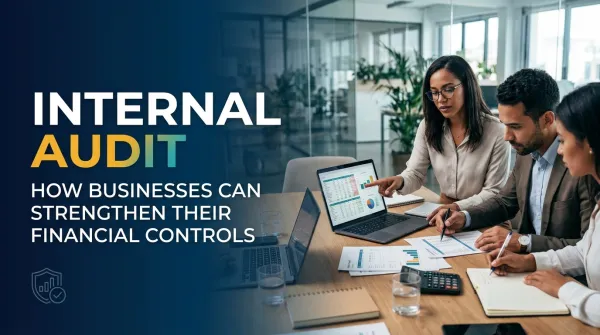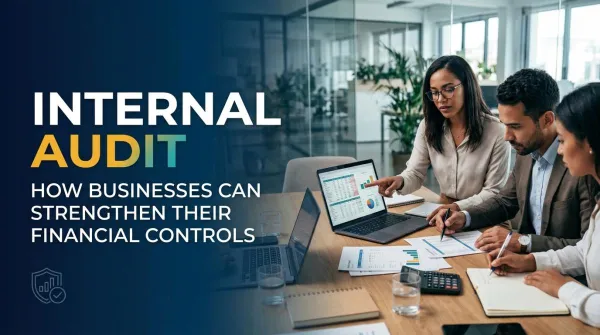
Internal Audit: How Businesses Can Strengthen Their Financial Controls
How confident are you that your business's financial transactions are properly recorded, approved and monitored?
Every organisation faces financial and operational risks. These may include errors in accounting records, unauthorised payments, inefficient procedures, fraud risks and weaknesses in internal controls.
One important function that helps organisations evaluate these risks and improve their operations is internal auditing.
What Is Internal Auditing?
Internal auditing is an independent, objective assurance and consulting activity designed to add value and improve an organisation's operations.
It helps an organisation evaluate its governance, risk management and internal control processes.
Unlike an external audit, which primarily provides an independent opinion on financial statements, internal auditing focuses more broadly on how effectively an organisation manages its risks and achieves its objectives.
Why Is Internal Auditing Important?
1. Strengthens Internal Controls
Internal auditors assess whether established procedures are working effectively and whether responsibilities are properly assigned.
2. Identifies Operational Risks
An internal audit can help management identify weaknesses in business processes before they develop into significant problems.
3. Helps Prevent and Detect Fraud
Reviewing transactions, approvals and financial procedures can help identify suspicious activities and weaknesses that may expose an organisation to fraud.
4. Improves Financial Accountability
Internal auditing encourages proper documentation, transparency and compliance with established financial procedures.
5. Supports Management Decisions
Internal audit findings provide management with information that can support improvements in business operations and resource management.
Key Areas Covered by Internal Auditing
Depending on the organisation's risk profile and audit plan, internal auditing may examine:
- Financial transaction processing.
- Procurement and purchasing procedures.
- Payroll administration.
- Inventory management.
- Cash and bank controls.
- Regulatory and policy compliance.
- Information technology controls.
- Asset protection and utilisation.
How Does the Internal Audit Process Work?
Step 1: Audit Planning
The auditor identifies relevant business risks, defines the audit objectives and establishes the scope of the review.
Step 2: Information Gathering
Relevant financial records, policies, transaction documents and operational information are collected.
Step 3: Testing and Evaluation
Selected transactions and business procedures are examined to determine whether controls are appropriately designed and operating effectively.
Step 4: Reporting Findings
Identified weaknesses, risks and areas requiring improvement are communicated to management.
Step 5: Follow-Up
The implementation of agreed corrective actions is monitored to determine whether identified weaknesses have been addressed.
Internal Audit vs External Audit
Internal audit and external audit serve different but complementary purposes.
Internal audit focuses on evaluating and improving governance, risk management and internal controls.
External audit provides independent assurance on whether financial statements are prepared, in all material respects, in accordance with the applicable financial reporting framework.
Both functions contribute to organisational accountability, although their responsibilities and objectives differ.
Common Internal Control Weaknesses Businesses Should Watch
Organisations may face control weaknesses when:
- Financial transactions are processed without proper approval.
- One employee controls every stage of a financial transaction.
- Supporting documents are incomplete or missing.
- Bank reconciliations are not reviewed regularly.
- Access to financial systems is poorly controlled.
- Audit recommendations are not implemented.
Addressing these weaknesses can improve the reliability of business processes.
Conclusion
Internal auditing is an important part of effective organisational governance. It helps businesses evaluate risks, strengthen internal controls and improve operational efficiency.
For organisations seeking better accountability and more reliable business processes, a properly structured internal audit function can provide valuable insight into areas requiring attention.
US & CO. Chartered Accountant
Educational insights into accounting, auditing, financial reporting and business management.