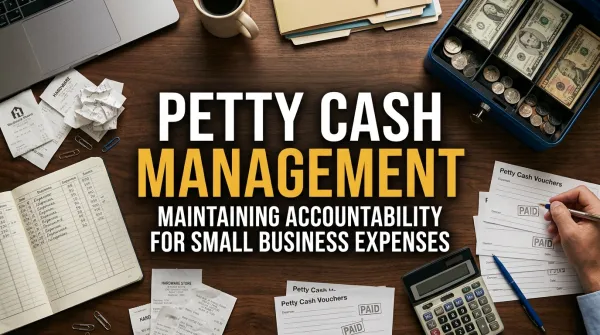
Petty Cash Management: Maintaining Accountability for Small Business Expenses
Small business expenses may appear insignificant individually, but when they are not properly monitored, they can create financial reporting problems and weaken internal controls.
Expenses such as transportation, office supplies, minor repairs and other small operational purchases are often paid through petty cash.
Although these transactions may involve relatively small amounts, they still require proper documentation and accountability.
What Is Petty Cash Management?
Petty cash management is the process of controlling, recording, monitoring and reconciling small cash payments made for routine business expenses.
Businesses establish petty cash funds to handle minor expenses without processing a formal bank payment for every transaction.
Why Is Petty Cash Management Important?
1. Controls Small Expenses: It helps businesses monitor minor operational spending.
2. Improves Accountability: Employees responsible for petty cash must account for the funds entrusted to them.
3. Supports Accurate Records: Proper documentation ensures that small expenses are included in accounting records.
4. Reduces Misuse of Funds: Clear procedures help prevent unauthorised withdrawals and unsupported payments.
5. Improves Budgeting: Management can monitor recurring minor expenses and identify unnecessary spending.
How Should Businesses Manage Petty Cash?
- Establish an approved petty cash limit.
- Appoint a responsible petty cash custodian.
- Require supporting receipts for payments.
- Record every transaction in a petty cash book.
- Set clear spending and approval limits.
- Conduct periodic cash counts.
- Reconcile the fund regularly.
- Investigate any unexplained shortages or differences.
Understanding the Imprest System
The imprest system is a common method of controlling petty cash.
Under this arrangement, a fixed amount is assigned to the petty cash custodian. As payments are made, receipts and vouchers are retained. The fund is then replenished by the amount spent, restoring it to the original authorised balance.
For example, if a business establishes a petty cash fund of ₦100,000 and spends ₦35,000 on approved expenses, it can replenish ₦35,000 to restore the fund to ₦100,000, subject to proper verification and approval.
Common Petty Cash Management Mistakes
- Making payments without receipts.
- Allowing unauthorised employees to access funds.
- Failing to record transactions immediately.
- Mixing personal money with company cash.
- Using petty cash for expenses beyond approved limits.
- Failing to conduct regular reconciliations.
Conclusion
Petty cash management is an important part of financial control. Even small transactions require proper documentation, approval and monitoring.
By establishing clear petty cash procedures, businesses can improve accountability, reduce financial irregularities and maintain more reliable accounting records.
US & CO. Chartered Accountant
Educational insights into accounting, auditing and effective business management.