AUTOMATING PAYROLL: SAVING TIME AND AVOIDING REGULATORY PENALTIES
Payroll is one of the most important business processes in every organization. Employees expect to be paid accurately and on time, while regulatory authorities expect employers to comply with applicable tax, pension, and statutory contribution requirements.
For many businesses in Nigeria, payroll administration is still handled manually using spreadsheets or paper-based records. Although this approach may appear manageable during the early stages of a business, it often becomes more difficult as the workforce grows. Manual processes can increase the likelihood of calculation errors, missed deadlines, incomplete records, and compliance challenges.
Payroll automation provides a structured approach to payroll administration by helping businesses calculate salaries, statutory deductions, maintain payroll records, and prepare reports more efficiently. When supported by appropriate internal controls and professional oversight, payroll automation can help organizations improve operational efficiency while supporting regulatory compliance.
Understanding Payroll Automation
Payroll automation refers to the use of payroll software and structured digital processes to manage employee compensation and statutory deductions with minimal manual intervention.
Depending on the organization's needs, an automated payroll system may assist with:
- Salary and wage calculations
- PAYE tax computations
- Pension contribution calculations
- National Housing Fund (NHF) deductions where applicable
- Industrial Training Fund (ITF) reporting where applicable
- Nigeria Social Insurance Trust Fund (NSITF) contribution records
- Leave and overtime calculations
- Payroll reports
- Payslip generation
- Payroll record management
Automation does not eliminate the need for professional review. Instead, it supports accuracy while allowing management and professional advisers to focus on verification, compliance, and strategic decision-making.
Why Payroll Accuracy Matters
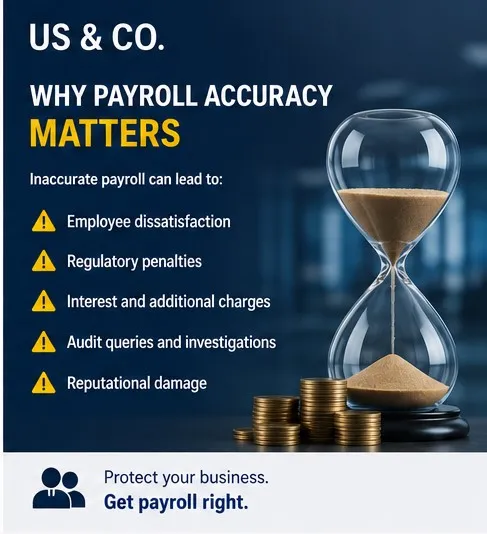
Payroll errors can have significant operational and financial consequences.
Examples include:
- Incorrect salary payments
- Wrong PAYE tax deductions
- Pension underpayments or overpayments
- Incorrect statutory remittances
- Employee disputes
- Poor accounting records
- Regulatory queries
- Financial reporting inaccuracies
Maintaining accurate payroll records supports transparency, internal control, employee confidence, and statutory compliance.
Benefits of Automating Payroll
1. Saves Valuable Administrative Time
Payroll calculations often involve numerous variables, including salaries, allowances, overtime, deductions, bonuses, taxes, and statutory contributions.
Automation reduces repetitive manual calculations, allowing finance and HR teams to devote more time to planning, analysis, and operational activities.
2. Reduces Human Error
Manual calculations can introduce arithmetic mistakes, formula errors, duplicated entries, or omitted deductions.
Automated payroll systems apply predefined rules consistently, helping reduce processing errors while maintaining standardized calculations.
3. Improves Record Keeping
Payroll records may be required during:
- Tax audits
- Financial audits
- Regulatory inspections
- Internal investigations
- Employee inquiries
Digital payroll systems generally provide organized historical records that are easier to retrieve when needed.
4. Supports Statutory Compliance
Employers in Nigeria are responsible for complying with various employment-related statutory obligations.
Depending on the nature of the organization, these may include:
- Pay As You Earn (PAYE)
- Pension contributions
- National Housing Fund requirements
- Industrial Training Fund obligations
- Nigeria Social Insurance Trust Fund contributions
An organized payroll process helps businesses maintain accurate calculations and documentation that support compliance.
5. Enhances Internal Control
Well-designed payroll systems can incorporate approval workflows, user access controls, audit trails, and segregation of duties.
These controls help reduce the risk of unauthorized payroll adjustments and strengthen governance.
Common Payroll Compliance Challenges in Nigeria
Businesses frequently encounter challenges such as:
- Incorrect employee tax classifications
- Late statutory remittances
- Inaccurate payroll records
- Errors in pension calculations
- Failure to maintain supporting documentation
- Inconsistent payroll procedures
- Difficulty reconciling payroll with accounting records
Many of these issues can be minimized through structured payroll processes, regular reviews, and professional guidance.
Regulatory Obligations Employers Should Understand
Payroll administration extends beyond paying salaries.
Employers may have obligations under various Nigerian laws and regulations, including those relating to:
- Personal Income Tax
- Pension administration
- Industrial Training Fund contributions
- Nigeria Social Insurance Trust Fund requirements
- National Housing Fund obligations where applicable
- Labour legislation
- Financial reporting requirements
The specific obligations applicable to a business depend on factors such as its size, industry, workforce, and legal structure.
Businesses should remain informed about applicable laws and comply with filing, reporting, and remittance deadlines.
Why Businesses Should Comply with Tax Regulations
Tax compliance contributes to sound business governance and helps organizations operate within Nigeria's legal framework.
Consistent compliance can assist businesses by:
- Maintaining accurate financial records
- Supporting corporate governance
- Reducing exposure to penalties and interest arising from non-compliance
- Facilitating regulatory reviews
- Supporting business transactions that require evidence of tax compliance
- Enhancing confidence among investors, lenders, and business partners
Compliance should be viewed as an ongoing business responsibility rather than a once-a-year exercise.
Why Many Businesses Engage Professional Tax Consultants
Payroll taxation and statutory compliance involve evolving legislation, administrative guidelines, documentation requirements, and filing procedures.
Professional tax advisers can assist businesses by helping to:
- Review payroll tax calculations
- Identify calculation errors before filing
- Interpret applicable tax legislation
- Prepare statutory returns
- Maintain supporting documentation
- Respond to regulatory inquiries
- Reconcile payroll with accounting records
- Monitor filing deadlines
- Improve internal payroll controls
- Support compliance reviews
Professional advice can help organizations manage compliance responsibilities while reducing avoidable errors.
Tax Credits and Available Opportunities in Nigeria
Businesses should understand that lawful tax planning differs from tax avoidance.
Depending on the applicable legislation and a company's specific circumstances, businesses may benefit from incentives or reliefs provided under Nigerian tax laws.
Examples may include:
- Eligible capital allowances
- Qualifying business incentives provided by law
- Tax reliefs available under applicable legislation
- Double taxation relief where relevant
- Investment-related incentives where statutory conditions are satisfied
- Industry-specific incentives established by legislation
Eligibility depends on the facts of each business and the applicable legal requirements. Professional advice can help businesses determine whether they qualify for available incentives.
Relevant Tax Laws Businesses Should Know
Understanding the legal framework governing taxation supports informed decision-making.
Some important legislation includes:
- Companies Income Tax Act (CITA)
- Personal Income Tax Act (PITA)
- Value Added Tax Act (VAT Act)
- Federal Inland Revenue Service (Establishment) Act
- Nigeria Tax Act, where applicable
- Pension Reform Act
- Industrial Training Fund Act
- Nigeria Social Insurance Trust Fund Act
- National Housing Fund Act
Businesses should also monitor amendments, subsidiary regulations, and official guidance issued by relevant tax authorities.
Practical Tips for Better Payroll and Tax Compliance
Businesses can strengthen payroll administration by:
- Maintaining complete employee records.
- Reviewing payroll periodically.
- Reconciling payroll with accounting records.
- Keeping supporting documents for statutory deductions.
- Filing statutory returns on time.
- Remitting deductions within prescribed timelines.
- Documenting payroll approval procedures.
- Updating payroll processes when legislation changes.
- Conducting periodic internal reviews.
- Seeking professional guidance where complex issues arise.
The Role of Professional Support
Payroll administration combines accounting, taxation, employment obligations, internal controls, and regulatory compliance.
Professional advisers can assist organizations in establishing appropriate payroll procedures, maintaining compliance documentation, reviewing statutory obligations, and supporting continuous improvement of payroll processes.
Where appropriate and consistent with professional ethical requirements, organizations may seek assistance from qualified Chartered Accountants or other suitably qualified professionals.
US & CO. (Chartered Accountant) provides professional services relating to accounting, auditing, taxation, payroll administration support, regulatory compliance, and business advisory services in accordance with applicable professional standards and legal requirements.
Conclusion
Payroll is far more than a monthly administrative task. It is an essential component of financial management, regulatory compliance, and effective corporate governance.
As businesses expand, payroll processes often become more complex. Appropriate automation, supported by sound internal controls and professional oversight, can help organizations improve efficiency, maintain accurate records, and meet statutory obligations.
By investing in reliable payroll processes and maintaining compliance with applicable laws, businesses place themselves in a stronger position to manage operational responsibilities and respond to regulatory requirements.
Frequently Asked Questions (FAQs)
1. What is payroll automation?
Payroll automation is the use of software and structured digital processes to calculate employee salaries, statutory deductions, and payroll reports while reducing manual processing.
2. Does payroll automation eliminate the need for human review?
No. Payroll systems support efficiency, but payroll records should still be reviewed by responsible personnel to confirm accuracy and compliance.
3. Why is accurate payroll important?
Accurate payroll supports timely employee payments, proper statutory deductions, reliable financial records, and compliance with applicable laws.
4. What statutory deductions may employers need to consider in Nigeria?
Depending on the business and applicable legal requirements, employers may need to consider PAYE tax, pension contributions, NHF obligations where applicable, ITF obligations, and NSITF contributions.
5. Can payroll errors result in regulatory issues?
Errors in payroll calculations, reporting, or statutory remittances may lead to compliance concerns, including additional assessments, interest, or penalties where provided by law.
6. Why should businesses seek professional payroll and tax advice?
Professional advisers can assist with interpreting tax laws, reviewing payroll calculations, preparing statutory returns, maintaining documentation, and supporting compliance with applicable regulations.
7. Can businesses benefit from tax incentives in Nigeria?
Certain tax incentives and reliefs may be available under Nigerian tax laws where statutory conditions are met. Eligibility depends on the specific circumstances of each business and the applicable legislation.
8. How often should payroll processes be reviewed?
Businesses should review payroll regularly, particularly when there are changes in staffing, compensation, tax legislation, or statutory contribution requirements.