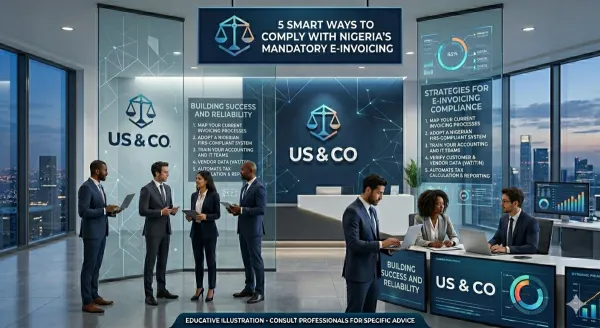
5 SMART WAYS TO COMPLY WITH NIGERIA’S MANDATORY E-INVOICING
Nigeria’s tax administration system is undergoing significant digital transformation. One of the major developments is the growing implementation of electronic invoicing (e-Invoicing) as part of efforts to improve tax transparency, record accuracy, and compliance monitoring.
For businesses operating in Nigeria, understanding the requirements surrounding e-Invoicing is no longer optional. It is an important aspect of modern tax administration and financial reporting.
In this article, we outline practical and compliant steps businesses can take to align with Nigeria’s mandatory e-Invoicing framework, while also highlighting the importance of professional tax guidance in reducing compliance risks.
Understanding Nigeria’s E-Invoicing Framework
Electronic invoicing refers to the digital generation, transmission, validation, and storage of invoices in a structured electronic format.
The Federal Inland Revenue Service (FIRS) continues to strengthen digital tax administration processes in line with global best practices and revenue monitoring objectives. E-Invoicing supports:
- Improved VAT administration
- Better transaction documentation
- Efficient audit trails
- Reduction in invoicing discrepancies
- Enhanced tax reporting accuracy
For many businesses, compliance will require adjustments in accounting systems, internal controls, documentation procedures, and reporting practices.
1. Adopt Accounting Software That Supports E-Invoicing
One of the first practical steps toward compliance is ensuring that your accounting or ERP system can generate invoices that align with regulatory requirements.
Businesses should assess whether their systems can:
- Generate digital invoices
- Maintain secure transaction records
- Integrate VAT reporting processes
- Produce audit-ready documentation
- Support data accuracy and invoice traceability
Manual invoicing methods may increase the likelihood of reporting inconsistencies, especially for businesses handling high transaction volumes.
Implementing compliant accounting systems can also improve operational efficiency and financial visibility across departments.
2. Maintain Accurate Taxpayer and Transaction Records
Accurate business records remain central to tax compliance in Nigeria.
Businesses should ensure that invoices contain complete and correct information, including:
- Tax Identification Number (TIN)
- Business name and address
- Transaction dates
- Description of goods or services
- Applicable VAT details
- Customer information where required
Incomplete or inconsistent invoice records may create complications during tax reviews, reconciliations, or statutory audits.
Strong documentation practices also support:
- Corporate governance
- Financial accountability
- Regulatory reporting obligations
3. Review VAT Compliance Processes Regularly
Nigeria’s tax laws place obligations on taxable persons to collect, account for, and remit Value Added Tax (VAT) appropriately.
Under the relevant provisions of the:
- Value Added Tax Act
- Federal Inland Revenue Service (Establishment) Act
- Companies Income Tax Act
businesses are expected to maintain proper accounting records and comply with filing obligations within stipulated timelines.
Regular internal reviews help businesses identify:
- VAT reporting gaps
- Duplicate invoice entries
- Incorrect tax calculations
- Documentation inconsistencies
Periodic compliance assessments can help minimize avoidable penalties and disputes.
4. Train Finance and Administrative Personnel
E-Invoicing compliance is not only a technology issue. It also involves people, processes, and internal accountability.
Businesses should ensure that relevant personnel understand:
- Invoice documentation procedures
- VAT application rules
- Record retention obligations
- Filing timelines
- Internal approval workflows
Where employees are not adequately informed, errors in invoice processing and tax reporting may occur.
Continuous training supports operational consistency and strengthens compliance culture within the organization.
5. Work With Qualified Tax and Accounting Professionals
Tax compliance obligations continue to evolve as regulatory authorities introduce new reporting and monitoring systems.
Engaging qualified tax professionals may help businesses:
- Interpret applicable tax regulations
- Reduce filing errors
- Improve documentation processes
- Prepare for regulatory reviews
- Align internal systems with current requirements
Professional guidance can also assist businesses in responding appropriately to tax queries, reconciliations, and statutory obligations.
For many business owners, especially growing enterprises, professional support provides structure and oversight in areas that may otherwise be overlooked.
Why Businesses Should Comply With Tax Regulations in Nigeria
Tax compliance is an important aspect of responsible business operations.
Complying with tax regulations helps businesses:
- Maintain regulatory standing
- Improve corporate credibility
- Facilitate access to financing opportunities
- Support smooth statutory audits
- Reduce exposure to penalties and interest charges
- Strengthen investor and stakeholder confidence
Businesses with organized tax records are also often better positioned during:
- Due diligence exercises
- Contract bidding processes
- Financial reviews
- Expansion planning
In addition, tax revenue contributes to public infrastructure, healthcare, education, and other national development initiatives.
Why Professional Tax Consulting Matters
Tax laws and compliance procedures can be technical, particularly where VAT administration, withholding tax, corporate tax filings, and digital reporting systems intersect.
Professional consulting firms assist businesses by:
- Reviewing tax positions
- Monitoring compliance deadlines
- Supporting accurate filing processes
- Advising on documentation requirements
- Helping businesses align with evolving regulations
Errors in tax filings may result in:
- Additional assessments
- Administrative penalties
- Delayed reconciliations
- Increased compliance exposure
Professional oversight can help reduce these risks through structured review processes and technical guidance.
Where appropriate and necessary, businesses may engage qualified chartered accountants and tax advisers for compliance support and regulatory interpretation.
The Growing Importance of Digital Tax Compliance
Globally, tax authorities are increasingly adopting digital monitoring systems to improve transparency and data verification.
Nigeria’s e-Invoicing initiatives reflect this broader shift toward:
- Digital recordkeeping
- Automated reporting
- Real-time transaction validation
- Improved compliance administration
Businesses that proactively adapt to these changes are generally better prepared for future reporting requirements and operational continuity.
Conclusion
Mandatory e-Invoicing represents an important development in Nigeria’s tax administration framework. Businesses that take early steps toward compliance may reduce operational disruptions and strengthen their internal reporting systems.
By maintaining accurate records, improving VAT processes, training personnel, and obtaining professional guidance where necessary, organizations can better navigate evolving regulatory expectations.
For businesses seeking structured support on tax compliance, accounting systems, and regulatory reporting processes, consulting qualified professionals may provide additional clarity and administrative efficiency.
Where further professional guidance is required, businesses may contact:
US & CO. (Chartered Accountants)
WhatsApp: 08056219998
Email: info@usc.com.ng
Website: US & CO. (Chartered Accountants)
Frequently Asked Questions (FAQs)
Is e-Invoicing mandatory for all businesses in Nigeria?
Implementation requirements may vary depending on regulatory directives, business size, sector, and applicable tax obligations. Businesses should monitor guidance issued by the Federal Inland Revenue Service (FIRS) and seek professional clarification where necessary.
What is the purpose of e-Invoicing?
E-Invoicing helps improve transaction transparency, tax reporting accuracy, invoice traceability, and record management.
Can manual invoices still be used?
This depends on the applicable compliance framework and reporting obligations. Businesses should assess whether their invoicing systems align with current regulatory expectations.
Why is VAT compliance important?
VAT compliance supports lawful tax administration and helps businesses avoid reporting inconsistencies, penalties, and disputes during tax reviews.
How can professional accountants help with tax compliance?
Qualified professionals assist businesses with:
- Tax filing reviews
- Regulatory interpretation
- Documentation processes
- Compliance monitoring
- Financial reporting support
What records should businesses retain for tax purposes?
Businesses should maintain:
- Invoices
- Receipts
- Bank records
- VAT schedules
- Payroll records
- Financial statements
- Relevant statutory filings
Proper documentation supports audits, reconciliations, and regulatory reviews.
Can small businesses benefit from professional tax consulting?
Yes. Professional guidance may help small businesses establish proper accounting structures, maintain organized records, and reduce avoidable filing errors as they grow.
