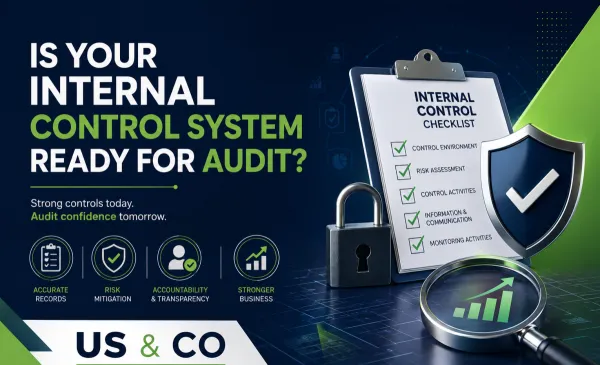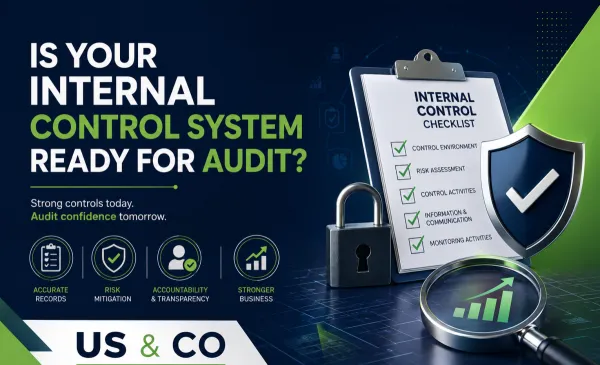
IS YOUR INTERNAL CONTROL SYSTEM READY FOR AUDIT?
Every successful business relies on more than strong sales and healthy cash flow. Behind every well-managed organization is a system of internal controls designed to safeguard assets, promote accurate financial reporting, support regulatory compliance, and reduce operational risk.
An audit does not simply examine financial statements. It also evaluates whether the systems and controls that generate financial information are operating effectively. Weak internal controls can lead to errors, inefficiencies, financial losses, and compliance challenges that may affect an organization's operations and reputation.
Whether your business is a start-up, a growing enterprise, or an established organization, periodically assessing your internal control system is an important part of sound corporate governance.
What Is an Internal Control System?
An internal control system consists of the policies, procedures, processes, and oversight mechanisms established by management to help the organization achieve its objectives.
An effective system of internal controls is generally designed to:
- Safeguard company assets.
- Promote accurate financial reporting.
- Support compliance with laws and regulations.
- Improve operational efficiency.
- Reduce the likelihood of fraud and error.
- Enhance accountability throughout the organization.
Internal controls are not limited to the finance department. They extend across purchasing, sales, payroll, inventory, information technology, human resources, and management oversight.
Why Internal Controls Matter Before an Audit
Preparing for an audit should begin long before auditors arrive.
Organizations with well-designed internal controls are often better positioned to:
- Produce reliable financial information.
- Locate supporting documentation promptly.
- Demonstrate compliance with statutory requirements.
- Resolve audit queries more efficiently.
- Strengthen confidence in financial reporting.
Strong internal controls contribute to an organized audit process and support continuous business improvement.
Signs Your Internal Control System May Need Attention
Business owners and management should periodically assess whether any of the following situations exist:
- Financial records are not updated regularly.
- Bank reconciliations are delayed.
- Supporting documents are difficult to locate.
- Duties are concentrated in one individual without independent review.
- Inventory differences occur frequently.
- Payroll records contain recurring errors.
- Cash transactions are inadequately documented.
- Approval procedures are inconsistent.
- Financial reports are often corrected after preparation.
- Tax filings require repeated amendments.
These indicators may suggest opportunities to strengthen existing control procedures.
Key Components of an Effective Internal Control System
1. Segregation of Duties
Critical financial responsibilities should be divided among different individuals where practicable.
For example:
- One employee authorizes payments.
- Another processes transactions.
- Another performs reconciliations.
Segregation of duties reduces the likelihood of errors and unauthorized activities remaining undetected.
2. Proper Authorization Procedures
Business transactions should be approved by designated personnel before they are processed.
Examples include:
- Purchases
- Payments
- Payroll adjustments
- Credit approvals
- Capital expenditure
Documented authorization procedures promote accountability and consistency.
3. Accurate Record Keeping
Reliable accounting records support:
- Financial reporting
- Tax compliance
- Regulatory inspections
- Internal reviews
- External audits
Maintaining complete documentation helps demonstrate the accuracy of recorded transactions.
4. Regular Reconciliations
Periodic reconciliation of financial records helps identify discrepancies promptly.
Businesses should reconcile:
- Bank accounts
- Cash balances
- Inventory records
- Accounts receivable
- Accounts payable
- Payroll records
- Tax accounts
Timely reconciliations support the accuracy of financial information.
5. Information Technology Controls
As businesses increasingly rely on digital systems, IT controls become more important.
Examples include:
- Password management
- User access controls
- Data backups
- Audit logs
- System updates
- Cybersecurity measures
Appropriate IT controls help protect sensitive financial information.
6. Independent Monitoring
Management should periodically review whether internal controls continue to operate effectively.
This may include:
- Internal reviews
- Management oversight
- Periodic risk assessments
- Independent internal audit activities where appropriate
Continuous monitoring allows weaknesses to be identified and addressed in a timely manner.
Common Internal Control Weaknesses
Organizations frequently encounter issues such as:
- Inadequate documentation.
- Weak approval procedures.
- Poor inventory management.
- Delayed reconciliations.
- Incomplete accounting records.
- Excessive reliance on manual processes.
- Limited supervision.
- Weak payroll controls.
- Insufficient system access controls.
Identifying these weaknesses early can reduce operational and compliance risks.
Internal Controls and Tax Compliance
A well-functioning internal control system supports accurate tax reporting.
Effective controls help businesses:
- Maintain complete accounting records.
- Prepare accurate tax computations.
- Support statutory filings.
- Retain documentation required by tax authorities.
- Monitor filing deadlines.
- Reconcile tax accounts with accounting records.
Strong controls reduce the likelihood of errors that may affect tax compliance.
Why Every Business Should Comply with Tax Regulations
Tax compliance forms part of responsible corporate governance.
Maintaining compliance helps businesses:
- Meet statutory obligations.
- Maintain accurate financial records.
- Reduce exposure to interest and penalties arising from non-compliance.
- Support applications requiring evidence of tax compliance.
- Improve confidence among investors, lenders, and business partners.
- Demonstrate sound governance practices.
Tax compliance is most effective when supported by reliable accounting systems and strong internal controls.
Why Businesses Engage Professional Tax Consulting Firms
Preparing and filing tax returns requires careful application of tax legislation and accurate financial information.
Professional tax advisers can assist businesses by helping to:
- Review accounting records before filing.
- Verify tax computations.
- Interpret applicable tax laws.
- Prepare statutory returns.
- Maintain supporting documentation.
- Monitor filing deadlines.
- Reconcile tax accounts.
- Respond to regulatory enquiries where appropriate.
- Support tax reviews and audits.
Professional guidance contributes to more accurate reporting and helps reduce avoidable filing errors.
Tax Credits, Reliefs and Opportunities in Nigeria
Businesses should understand that lawful tax planning involves making appropriate use of provisions contained in tax legislation.
Subject to eligibility and applicable legal requirements, businesses may benefit from:
- Capital allowances on qualifying assets.
- Investment-related tax incentives.
- Industry-specific incentives.
- Double taxation relief where applicable.
- Tax reliefs provided under relevant legislation.
- Other incentives introduced by applicable laws and regulations.
Eligibility depends on each business's circumstances and compliance with statutory conditions.
Professional advice may assist businesses in identifying incentives applicable to their operations.
Relevant Nigerian Tax Laws Businesses Should Understand
Understanding Nigeria's tax framework supports informed decision-making and compliance.
Important legislation includes:
- Companies Income Tax Act (CITA)
- Personal Income Tax Act (PITA)
- Value Added Tax Act (VAT Act)
- Federal Inland Revenue Service (Establishment) Act
- Nigeria Tax Act, where applicable
- Capital Gains Tax Act
- Stamp Duties Act
- Pension Reform Act
Businesses should also monitor amendments, subsidiary regulations, and official guidance issued by the relevant authorities.
Practical Steps to Strengthen Internal Controls
Organizations can improve their internal control systems by:
- Reviewing financial procedures periodically.
- Maintaining complete supporting documents.
- Performing regular bank reconciliations.
- Restricting access to accounting systems.
- Separating key financial responsibilities.
- Updating accounting policies where necessary.
- Conducting periodic internal reviews.
- Training employees on internal procedures.
- Monitoring compliance with established policies.
- Seeking professional advice on complex control or compliance matters.
The Role of Professional Accountants and Auditors
Internal controls are an essential part of financial reporting, risk management, and regulatory compliance.
Professional accountants and auditors assist organizations by evaluating financial processes, reviewing internal controls, supporting compliance, improving accounting systems, and providing recommendations consistent with applicable professional standards.
Where appropriate, businesses may engage qualified Chartered Accountants to assist with accounting, auditing, taxation, internal control reviews, and regulatory compliance.
US & CO. (Chartered Accountant) provides professional services relating to accounting, auditing, taxation, internal control reviews, regulatory compliance, and business advisory services in accordance with applicable professional standards and legal requirements.
Conclusion
An effective internal control system is not merely an accounting requirement—it is an important component of sound business management.
Strong internal controls help organizations safeguard assets, improve financial reporting, support tax compliance, strengthen governance, and prepare more effectively for audits.
Regularly reviewing and improving internal control procedures enables businesses to respond to changing risks while maintaining reliable financial information for management, regulators, investors, and other stakeholders.
Frequently Asked Questions (FAQs)
1. What is an internal control system?
An internal control system comprises the policies, procedures, and processes established to help safeguard assets, ensure accurate financial reporting, promote operational efficiency, and support compliance with applicable laws and regulations.
2. Why are internal controls important before an audit?
Strong internal controls help ensure financial records are complete, accurate, and supported by appropriate documentation, contributing to a more efficient audit process.3. Can small businesses benefit from internal controls?
Yes. Businesses of all sizes benefit from appropriate internal controls. The nature and complexity of the controls should be proportionate to the size and operations of the business.
4. How often should internal controls be reviewed?
Internal controls should be reviewed periodically and whenever there are significant changes in business operations, personnel, technology, or regulatory requirements.
5. How do internal controls support tax compliance?
Internal controls help maintain accurate accounting records, support tax calculations, preserve documentation, and improve the accuracy and timeliness of statutory filings.
6. Why should businesses seek professional tax advice?
Professional advisers assist with interpreting tax legislation, reviewing financial records, preparing statutory returns, maintaining documentation, and supporting compliance with applicable regulations.
7. Are tax incentives available to businesses in Nigeria?
Depending on eligibility and applicable legislation, businesses may qualify for capital allowances, investment incentives, industry-specific reliefs, or other statutory tax incentives.
8. Can effective internal controls eliminate all business risks?
No. Internal controls help reduce risk and improve governance, but they cannot eliminate every operational, financial, or compliance risk. Regular monitoring and continuous improvement remain essential.