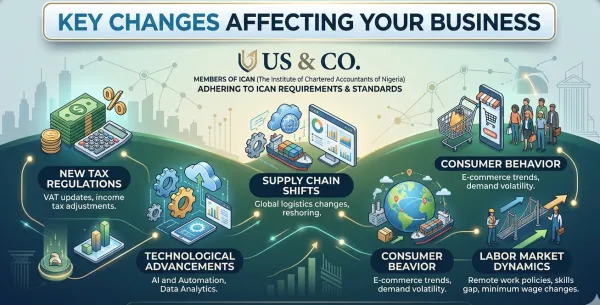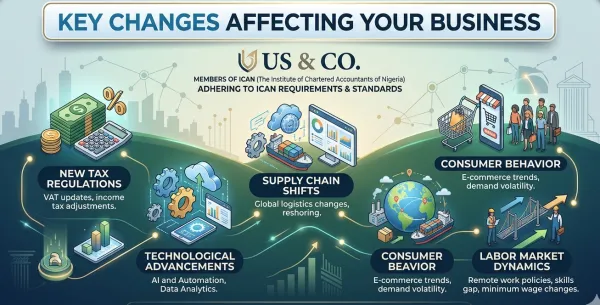
NAVIGATING THE 2026 FINANCE ACT: KEY CHANGES AFFECTING YOUR BUSINESS
As Nigeria’s fiscal and regulatory environment continues to evolve, businesses are expected to pay closer attention to tax administration, statutory reporting, and compliance obligations. The 2026 tax reforms introduced through the Nigeria Tax Act and related legislation represent a significant shift in the country’s tax framework, with implications for companies of different sizes and sectors.
For business owners, finance managers, and entrepreneurs, understanding these developments is no longer optional. Tax compliance has become an important aspect of corporate governance, financial planning, and operational sustainability.
This article outlines key changes introduced under the 2026 Finance and Tax reforms, why compliance matters, and why engaging qualified professional consultants may help businesses reduce avoidable risks and reporting errors.
Understanding the 2026 Tax Reform Landscape in Nigeria
Nigeria’s 2025 Tax Reform Acts, which became effective from January 2026, introduced a consolidated and modernised tax framework aimed at improving administration, transparency, and revenue efficiency. The reforms include:
- The Nigeria Tax Act (NTA)
- The Nigeria Tax Administration Act (NTAA)
- The Nigeria Revenue Service Act (NRSA)
- The Joint Revenue Board Act (JRBA)
These reforms affect:
- Companies Income Tax (CIT)
- Value Added Tax (VAT)
- Capital Gains Tax (CGT)
- Withholding Tax (WHT)
- Digital tax administration
- Tax filing and remittance obligations
- Cross-border taxation rules
The objective is to create a more unified and transparent tax system while improving regulatory efficiency.
Key Changes Affecting Businesses in 2026
1. Expanded Tax Compliance Requirements
Businesses are expected to maintain more accurate records and timely filing processes under the revised administration framework.
Regulators are placing stronger emphasis on:
- Digital recordkeeping
- Proper documentation
- Transaction traceability
- Timely remittance of taxes
- Electronic filing systems
This means businesses with weak accounting structures may face increased compliance exposure.
2. Revised Definition of Small Companies
Under the updated framework, companies with annual turnover up to ₦100 million may qualify for certain exemptions from Companies Income Tax and development levy requirements.
For SMEs, this adjustment may provide relief, but eligibility depends on proper financial reporting and documentation.
Businesses should therefore maintain accurate accounting records to support their tax status and avoid disputes during regulatory reviews.
3. Increased Focus on Digital Transactions
The reforms continue Nigeria’s movement toward a more digitised tax administration system.
Authorities are expected to rely more heavily on:
- Electronic invoices
- Digital payment trails
- Automated reporting systems
- Integrated tax platforms
Businesses operating without structured accounting systems may encounter reconciliation challenges during audits or tax reviews.
4. Cross-Border and Non-Resident Tax Rules
The new framework introduces wider taxation rules affecting:
- Offshore transactions
- Foreign-controlled entities
- Digital service providers
- International contracts
Companies engaged in international trade, consulting, technology services, logistics, and related sectors should pay close attention to evolving compliance obligations.
5. Greater Regulatory Transparency and Monitoring
The reforms support stronger transparency measures and enhanced revenue monitoring across government systems.
This development means businesses may increasingly require:
- Proper tax planning
- Internal compliance reviews
- Reconciliation procedures
- Structured accounting support
Why Tax Compliance Matters for Every Business
Tax compliance is an essential aspect of responsible business operations.
A compliant business is generally better positioned to:
- Maintain accurate financial records
- Access financing opportunities
- Participate in government contracts
- Build investor confidence
- Reduce exposure to penalties and disputes
- Improve long-term operational stability
Failure to comply with statutory obligations may result in:
- Penalties and interest charges
- Regulatory investigations
- Delays in contract approvals
- Reputational concerns
- Financial disruptions
Compliance should therefore be viewed as part of strategic business management rather than merely an annual obligation.
Why Many Businesses Engage Professional Tax Consultants
Tax laws are technical and continue to evolve. Even businesses with internal finance teams may require professional guidance to interpret changing regulations accurately.
Professional tax consultants may assist businesses with:
1. Accurate Tax Filing
Errors in tax computations, VAT treatment, withholding tax schedules, or statutory reporting can create avoidable liabilities.
Professional review processes may help reduce reporting inconsistencies.
2. Regulatory Interpretation
Tax reforms often contain technical provisions that require professional interpretation.
Engaging qualified professionals may assist businesses in understanding:
- Filing obligations
- Exemption thresholds
- Industry-specific compliance requirements
- Documentation expectations
3. Risk Management
Professional tax advisory support may help businesses identify compliance gaps before regulatory reviews occur.
This proactive approach can support stronger internal controls and documentation practices.
4. Time and Operational Efficiency
Many business owners already manage operations, staffing, customer service, and growth responsibilities.
Delegating tax compliance responsibilities to qualified professionals may allow management teams to focus on core business activities while maintaining regulatory discipline.
5. Support During Tax Reviews and Audits
Where tax authorities request clarification or supporting records, professional consultants may assist businesses with:
- Documentation preparation
- Reconciliation processes
- Response coordination
- Compliance reviews
The Relevance of Tax Laws to Business Sustainability
Tax laws play an important role in economic administration and public finance management.
They help establish:
- Revenue generation structures
- Business accountability standards
- Regulatory consistency
- Economic transparency
- Public infrastructure funding
For businesses, understanding applicable tax laws helps support informed financial decisions and responsible governance practices.
Tax compliance also contributes to broader economic stability by supporting government funding for infrastructure, healthcare, education, and public services.
Building a Compliance-Oriented Business Culture
Businesses that approach tax management with structure and discipline are generally better prepared for regulatory changes.
Practical steps include:
- Maintaining proper bookkeeping systems
- Conducting periodic compliance reviews
- Retaining supporting documentation
- Monitoring filing deadlines
- Seeking professional guidance where necessary
- Adopting digital accounting processes
Compliance is increasingly becoming part of business continuity planning in Nigeria’s evolving financial environment.
Professional Support and Advisory Services
Where professional assistance is required, businesses may consider engaging qualified chartered accountants and licensed tax professionals for guidance on compliance obligations and reporting processes.
US & CO. (Chartered Accountants)
General business contact information may be provided for administrative enquiries and consultation scheduling:
- WhatsApp: 08056219998
- Email: info@usc.com.ng
(Providing factual business contact details for professional communication purposes is generally acceptable when presented in a restrained and informational manner.)
Frequently Asked Questions (FAQ)
1. What is the purpose of the 2026 tax reforms in Nigeria?
The reforms are intended to modernise tax administration, improve compliance processes, and create a more unified taxation framework across different categories of taxes.
2. Will small businesses still pay Companies Income Tax?
Certain small companies meeting specified turnover thresholds may qualify for exemptions under the revised framework. However, businesses are still expected to maintain proper records and comply with filing obligations.
3. Why should businesses engage professional tax consultants?
Professional consultants may assist with accurate filing, regulatory interpretation, documentation support, and compliance management, particularly as tax regulations continue to evolve.
4. Can poor tax filing affect business growth?
In some cases, poor compliance records may affect financing opportunities, contract eligibility, regulatory relationships, and operational planning.
5. What records should businesses maintain for tax purposes?
Businesses should generally retain:
- Sales records
- Expense documentation
- Payroll records
- VAT schedules
- Bank statements
- Invoices and receipts
- Statutory filings
6. How often should businesses review their tax compliance status?
Periodic reviews are advisable, particularly before annual filings, audits, major transactions, or regulatory changes.