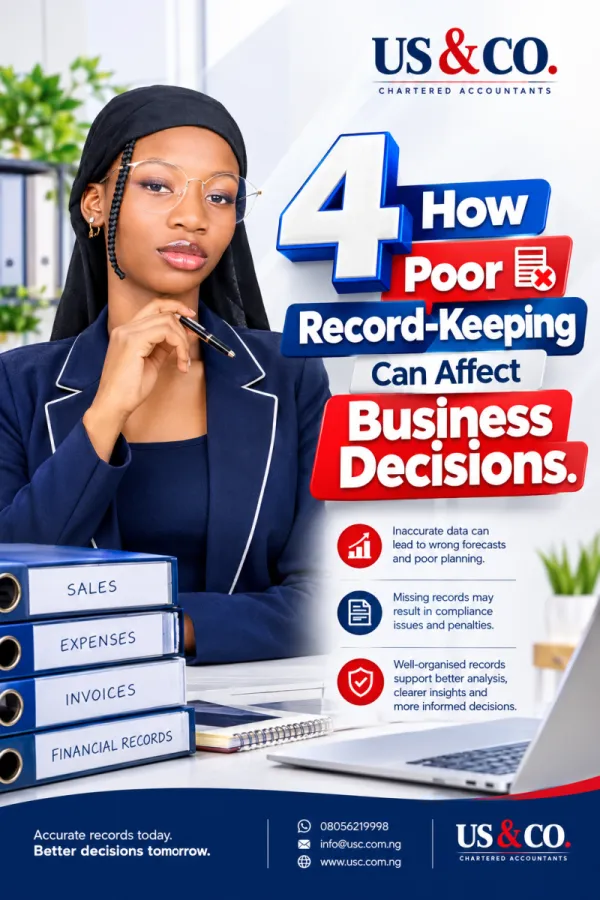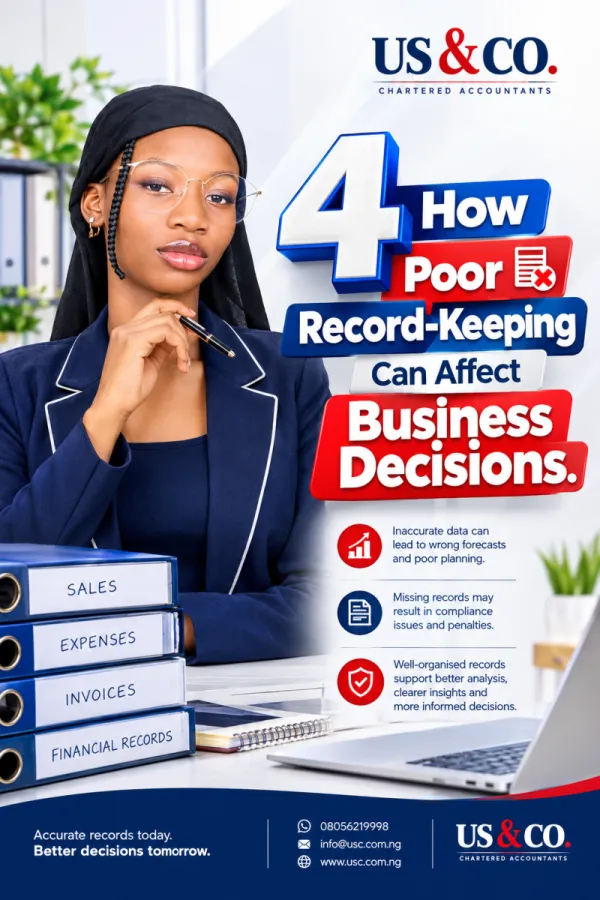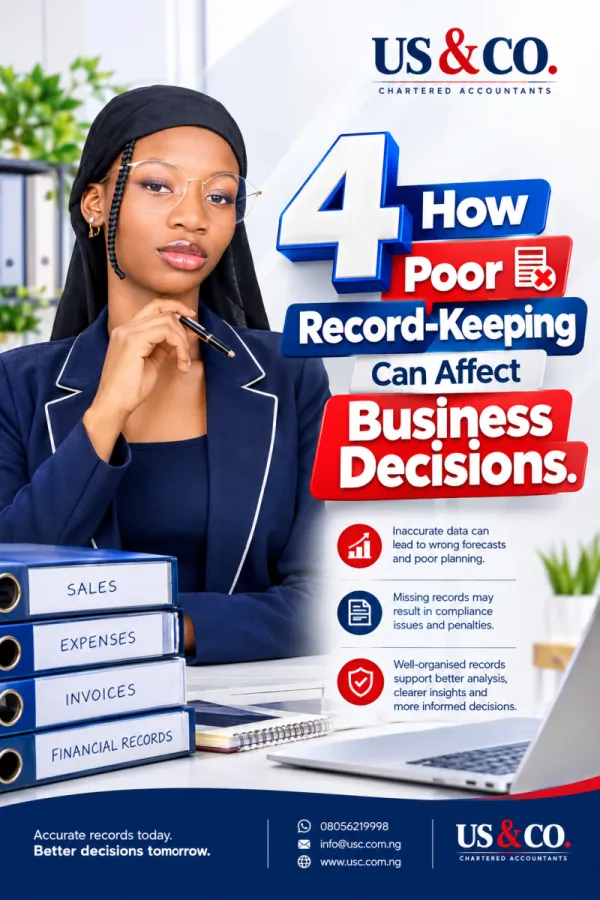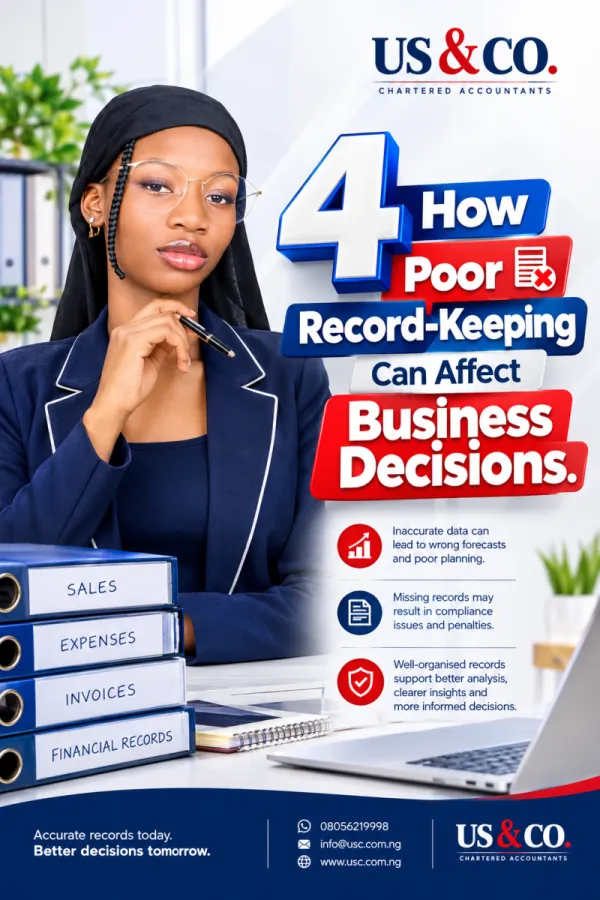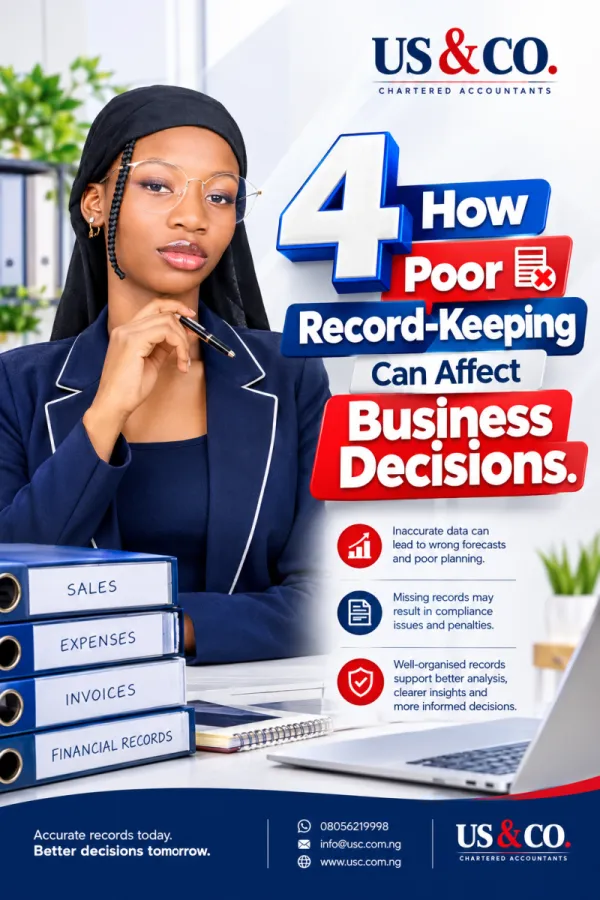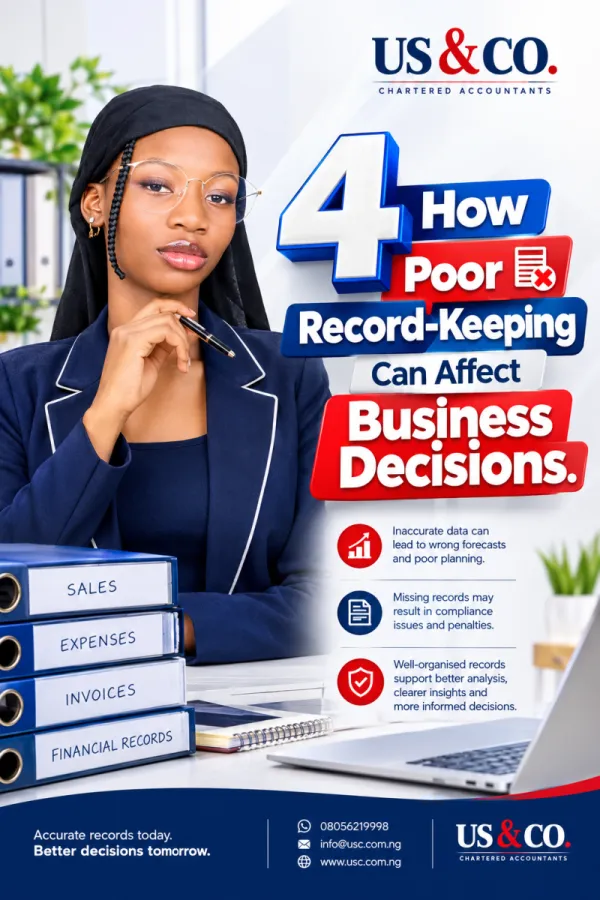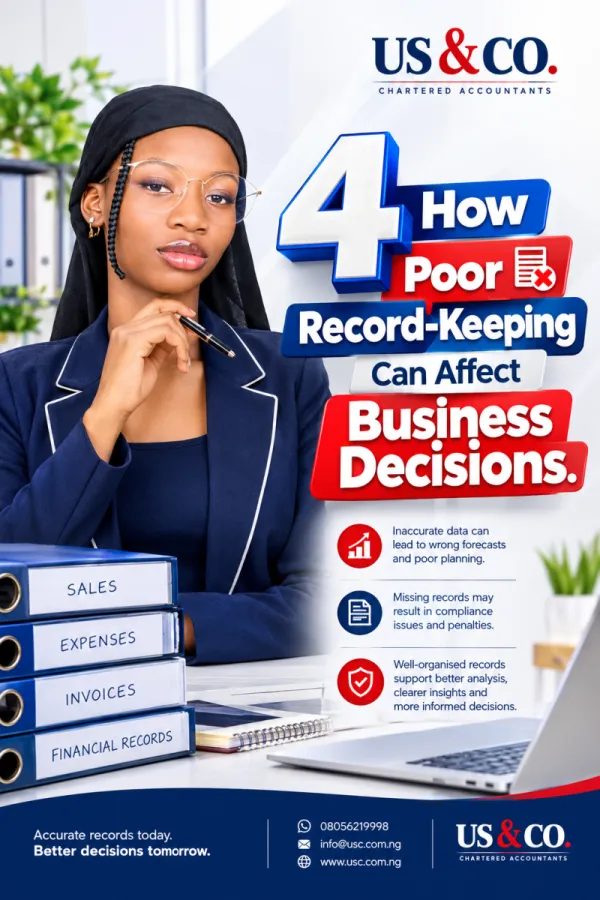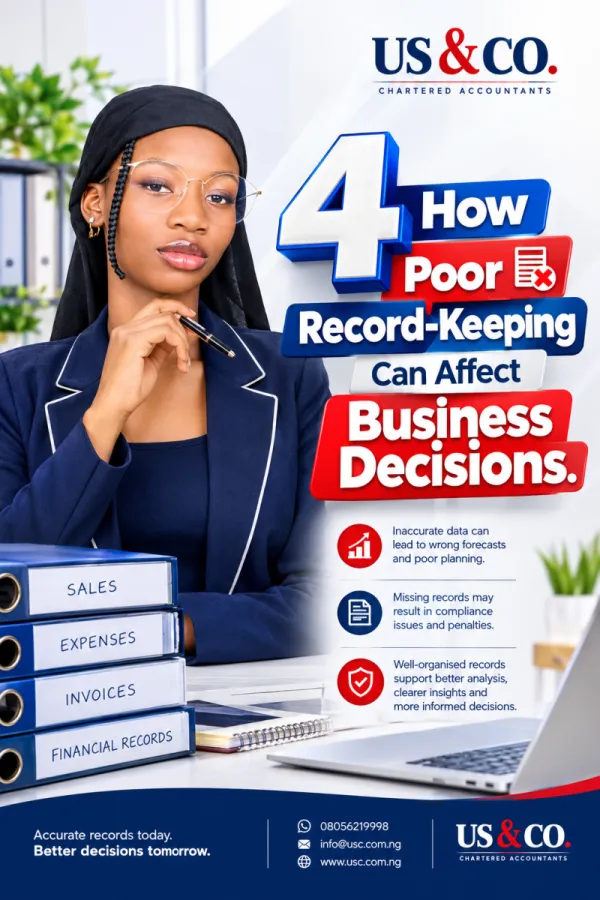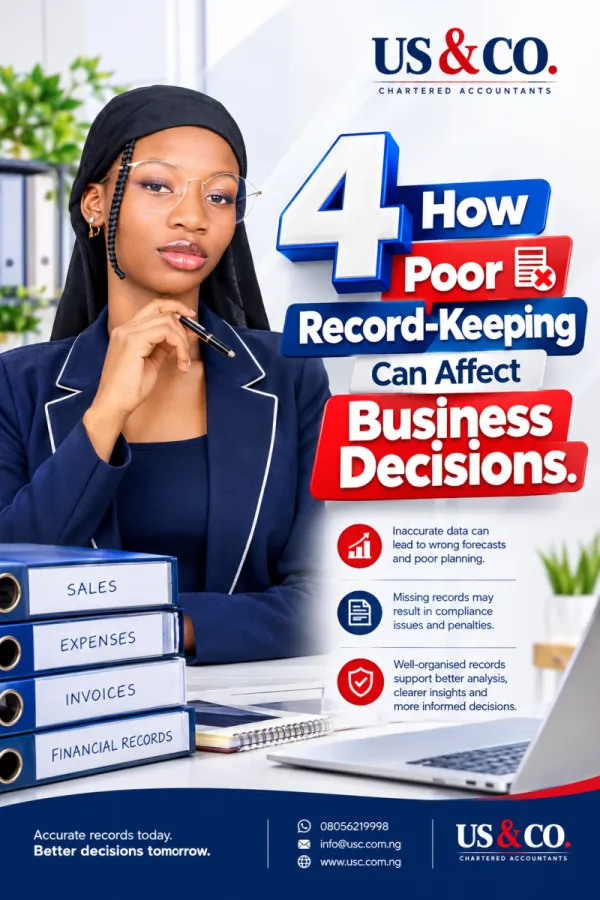
How Poor Record-Keeping Can Affect Decisions
How Poor Record-Keeping Can Affect Business Decision is often the difference between a business that plans based on verified numbers and one that reacts after avoidable problems arise. Accurate records do more than satisfy compliance; they shape budgeting, pricing, cash-flow planning, investment timing, and risk management.
How Poor Record-Keeping Can Affect Decisions
When books and supporting documents are incomplete or inconsistent, the business may:
- Misstate revenue, expenses, and cash positions, leading to incorrect profit figures.
- Make flawed investment choices due to unreliable cost data and gross margin visibility.
- Delay or avoid corrective actions during tax reviews or internal audits.
- Increase the likelihood of disputes with tax authorities because evidence is missing or unclear.
Nigeria Revenue Service (NRS) requirements on tax administration consistently emphasize that taxpayers should keep proper books of account and supporting records for the relevant tax periods to support returns and assessments. In practical terms, NRS expects records that can be presented during review and audit processes, including invoices, receipts, payroll records, and bank statements.
Why Every Business Should Comply with Tax Regulation
Tax compliance is not only about filing; it is about being able to justify tax positions with evidence. Compliance supports:
- Predictable cash-flow (reduced likelihood of unexpected assessments).
- Improved credibility for lenders, investors, and counterparties.
- Better internal controls and governance, which supports sound decision-making.
Important Tax Implications of Weak Records
Poor record-keeping can affect several tax areas, depending on the business profile, including:
- VAT Inability to match invoices/outputs and inputs can lead to blocked input claims or assessed liabilities.
- Withholding Tax (WHT): Missing remittance records or inaccurate deduction schedules can create exposure.
- PAYE:Incomplete payroll records may result in incorrect deductions and remittance.
- Companies Income Tax (CIT): Unsupported expenses may be disallowed, increasing assessable profit.
- Capital allowances: If fixed asset registers and documentation are weak, capital allowances may not be claimed correctly.
- Penalties and interest: Where returns do not align with supporting records, assessments may be challenged and penalties may apply.
Reasons and Advantages of Using a Professional Consulting Firm
Engaging a professional such as US & CO. (Chartered Accountant) helps the business maintain record quality and reduce errors through:
- Document mapping: linking each business activity to the correct tax treatment and evidence.
- Review of bookkeeping processes: ensuring consistent recording, numbering, and reconciliation.
- Evidence readiness: organizing invoices, bank statements, payroll schedules, and asset registers for audit support.
- Support for decision cycles: aligning financial reports with investment plans and tax obligations.
- Reduced compliance risk: fewer unsupported positions in returns and fewer gaps during reviews.
Step-by-Step: How to Invest Using Reliable Records (Decision-Readiness)
Accurate record-keeping enables investment decisions supported by verifiable figures. A practical approach is:
1 Reconcile financials: Confirm bank accounts, sales records, expense registers, and payroll summaries.
2. Identify decision metrics: Establish targets using verified margins, unit costs, and cash conversion cycles.
3. Separate business vs. tax impacts: Classify expenses correctly and confirm taxable vs. non-taxable items.
4. Assess funding and cash-flow timing: Use reconciled cash flow to determine whether investment will strain operations.
5. Support tax planning assumptions: Confirm how costs may affect CIT/VAT/WHT and whether reliefs (e.g., capital allowances) are properly supported.
6. Document approvals and rationale: Keep board/management minutes and investment memos aligned with the financial evidence.
7. Monitor post-investment performance: Track outcomes against the records used to justify the investment.
Tips on Nigeria Tax Credit and Opportunities (Record-Driven)
Common areas where records matter include:
- Withholding tax credit management: Ensure deduction schedules and remittance evidence are consistent with returns.
- Capital allowances documentation: Maintain fixed asset registers, acquisition documents, and proper categorization.
- Tax relief and incentives eligibility: Support eligibility with documentation relevant to the qualifying activity.
- VAT input evidence controls: Keep valid tax invoices/receipts and ensure inputs relate to taxable activities.
Record accuracy supports correct application of Nigerian tax legislation across areas such as:
- Value Added Tax (VAT) Act (input/output evidence)
- Companies Income Tax Act (allowability of expenses and profit computation)
- Personal Income Tax Act (PAYE administration and payroll evidence)