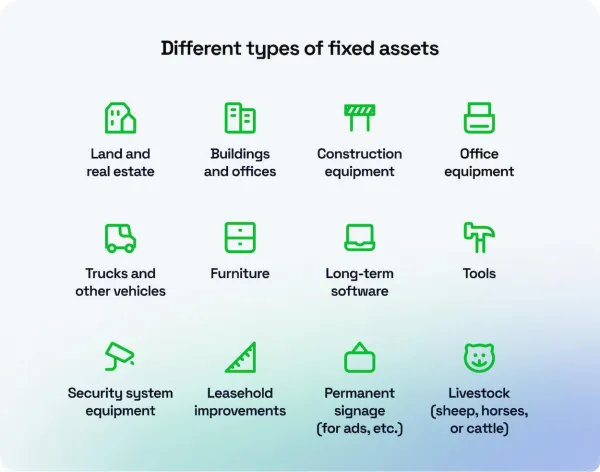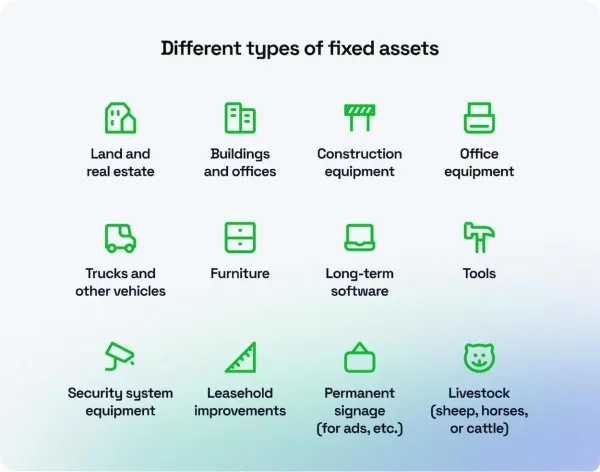
Businesses invest in assets to support their daily operations. These assets may include vehicles, computers, office furniture, manufacturing equipment, buildings and machinery.
However, most assets do not provide economic benefits indefinitely. Their useful lives are limited by physical wear and tear, technological changes and other factors.
Depreciation is the accounting process used to allocate the depreciable amount of a tangible asset over its estimated useful life.
Understanding depreciation is essential for accurate financial reporting and effective asset management.
1. What Is Depreciation?
Depreciation refers to the systematic allocation of an asset's depreciable amount over its useful life.
It does not necessarily represent the actual market value reduction of an asset.
For example, a company purchases office equipment for ₦5 million. The equipment is expected to be used for five years, after which it may have an estimated residual value of ₦500,000.
The depreciable amount is:
₦5,000,000 – ₦500,000 = ₦4,500,000.
This amount is allocated over the equipment's useful life.
2. Understanding the Accounting Standard
IAS 16, Property, Plant and Equipment, provides guidance on recognising and measuring tangible assets used in business operations.
An item of property, plant and equipment is recognised as an asset when future economic benefits are expected to flow to the business and its cost can be measured reliably.
IAS 16 also requires depreciation to be allocated systematically over the asset's useful life.
IAS 16 Property, Plant and Equipment+1
3. Common Methods of Calculating Depreciation
Straight-Line Method
This method allocates an equal depreciation expense over each year of an asset's useful life.
Formula:
Annual Depreciation = (Cost – Residual Value) ÷ Useful Life.
Using the earlier example:
₦4,500,000 ÷ 5 years = ₦900,000 annually.
Reducing Balance Method
This method applies a fixed depreciation rate to the asset's carrying amount at the beginning of each period.
As the carrying amount reduces, the depreciation expense also reduces.
Units of Production Method
This method calculates depreciation based on the actual usage or production output of an asset.
It may be appropriate where the consumption of economic benefits is closely related to production activity.
The depreciation method should reflect the expected pattern in which the asset's economic benefits are consumed.
4. How Depreciation Affects Financial Statements
Depreciation affects business financial reporting in two important ways.
First, it is recognised as an expense in the income statement unless it forms part of the cost of another asset.
Second, accumulated depreciation reduces the carrying amount of the asset presented in the statement of financial position.
For example, annual depreciation of ₦900,000 reduces the asset's carrying amount by that amount, assuming no other adjustments.
It is important to understand that depreciation is generally a non-cash accounting expense in the period it is recognised.
5. Common Depreciation Errors Businesses Should Avoid
Some common errors include:
Failing to maintain a fixed asset register.
Using inappropriate useful lives.
Ignoring residual values.
Failing to review depreciation estimates.
Not recording asset disposals.
Applying inconsistent depreciation policies.
IAS 16 requires useful lives and residual values to be reviewed at least at each financial year-end. Depreciation begins when an asset is available for use.
2021 Issued IFRS Standards (Part A)+1
Conclusion
Depreciation plays an important role in ensuring that the cost of business assets is allocated appropriately over the periods in which they generate economic benefits.
Proper depreciation accounting supports accurate financial reporting, effective asset monitoring and better business decisions.
US & CO. Chartered Accountants